Institut d'études avancées de Nantes
France

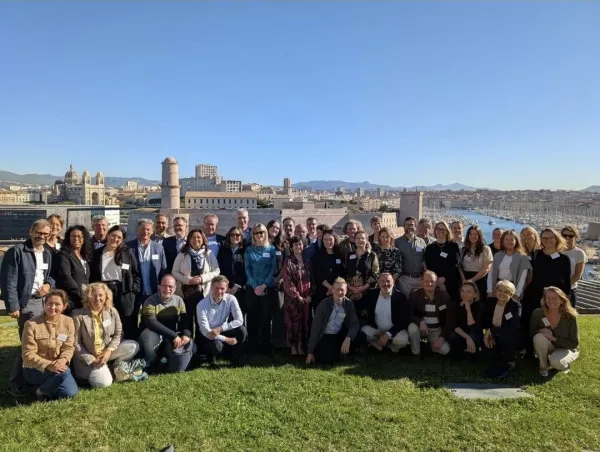
The annual conference of the Network of European Institutes for Advanced Study (NETIAS) took place this year at Iméra, the Institute for Advanced Study of Aix-Marseille University, on 12 and 13 October 2026. It is an important event for the network, which brings together more than 25 member institutes and welcomes over 500 fellows each year.
The annual conference of the Network of European Institutes for Advanced Study (NETIAS) took place this year at Iméra, the Institute for Advanced Study of Aix-Marseille University, on 12 and 13 October 2026. It is an important event for the network, which brings together more than 25 member institutes and welcomes over 500 fellows each year.
This year's meeting marked the formal appointment of a new NETIAS President. After two consecutive terms served by anthropologist Christina Garsten, Director of the Swedish Collegium for Advanced Study (Uppsala), the position is now held by Ralf von den Hoff, Professor of Classical Archaeology at the University of Freiburg and Executive Director of FRIAS since 2022. Olivier Bouin, Director of the RFIEA, continues to serve as the network's Secretary General.
Hosted by Iméra, discussions focused on the growing threats facing research communities in Europe and around the world, and on the renewed importance of Institutes for Advanced Study as safe havens for freedom of thought and research, particularly for those whose work puts them at greatest risk in their countries of residence.
True to the tradition of Institutes for Advanced Study, NETIAS continues, now more than ever, to embody a network of collaboration and intellectual solidarity.
The conference also featured a workshop on “Drawing as Research Practice”, led by artist Josune Urrutia Asua, Senior Fellow at Iméra. Her work explores the potential of drawing as a research tool, an epistemological medium and a means of exchange. The NETIAS conference concluded with a friendly game of pétanque in the gardens of Iméra. The next NETIAS conference will take place in autumn 2027 at NIAS (Amsterdam).
Since its launch last year, the network has further developed its identity through a website, which provides information on open calls, researchers in residence and initiatives carried out across the network or through collective projects.
These include CAT (Constructive Advanced Thinking), which enables groups of researchers working on a shared project to undertake short stays at different institutes within the network, and NETIAS Debates, which bring together researchers in residence at member institutes to discuss topics such as the role of artistic creation in research, artificial intelligence and science diplomacy.
The network's work takes shape through joint actions and unanimously shared statements, as well as through thematic working groups seeking to advance reflection and establish platforms for knowledge exchange and resource-sharing. This year, the working group focusing on funding for Institutes for Advanced Study identified important opportunities at European level to support the continuation of the network's projects.
Three other working groups presented their work to the assembly. The Arts-Science group, led by Iméra and involving the Nantes Institute for Advanced Study, has resulted in the creation of an interactive map identifying Institutes for Advanced Study offering residency programmes open to artists and creative practitioners. The map will soon be available directly on the NETIAS website.
The Scholars at Risk group, which explores ways to strengthen the conditions for hosting researchers and artists at risk within the institutes, is co-chaired by the Nantes Institute for Advanced Study and the Collegium Helveticum in Zurich. It presented the work carried out throughout the year, with particular emphasis on a workshop on academic freedom held at the Nantes Institute for Advanced Study in March 2026.
The working group will continue its efforts to identify funding opportunities to support the hosting of researchers and artists at risk, complementing the initiatives already established by individual institutes.
Finally, the research group on interdisciplinarity, led by CRASSH (Cambridge) and the Collegium Helveticum, facilitated a group discussion on what interdisciplinarity can and should mean within today's Institutes for Advanced Study ecosystems. Moving beyond a term that is often misunderstood, the discussion explored how interdisciplinarity can be put into practice through situated and established approaches that respond to the needs of research.