Home

Navigation principale

  • Who we are
    • General overview
    • Members directory
    • How to apply
    • The team
  • Fellows
  • Programmes
  • Calls for applications
  • Events
  • Ressources
New Europe College
19.11.2026
New Europe College (Plantelor 21, Bucharest) & via Zoom

Corruption, Patronage, and Imperial Control: Rethinking Late Phanariot Governance in the Danubian Principalities (1812–1821)

Constanța VINTILĂ, TransCorr team member; PhD. Senior researcher, Nicolae Iorga Institute of History of the Romanian Academy/ New Europe College, Bucharest

On Thursday, 19 November 2026, at 16.00-18.00 (Bucharest time)

Recurrent link for all TransCorr seminars:

Join Zoom Meeting
https://us02web.zoom.us/j/86053564093?pwd=soarDcaeGTlulMIYP18BZtzjrtjKm…

Meeting ID: 860 5356 4093
Passcode: 197637

Abstract: 

My conference reinterprets the final decade of Phanariot rule in Wallachia and Moldavia through the analytical lenses of corruption theory, principal–agent models, and neo-patrimonial governance. Focusing on the reigns of Ioan Caragea (Wallachia, 1812–1818) and Scarlat Callimachi (Moldavia, 1812–1819), it challenges the longstanding nationalist narrative that portrays late Phanariot rule primarily as a period of moral decay and endemic corruption.

Rather than treating corruption as individual deviance, the paper conceptualizes it as a structural feature of Ottoman imperial governance. The Danubian princes functioned as agents of the Ottoman center, operating under conditions of high fiscal extraction, short tenure, and limited monitoring. Such institutional constraints created predictable incentives for rent-seeking, patronage distribution, and office commodification. Within this framework, Caragea’s much-criticized fiscal policies and crisis governance during the plague epidemic appear less as exceptional abuses and more as intensified expressions of systemic pressures.

The divergence between Caragea’s negative reputation and Callimachi’s relative favor at the Ottoman court is analyzed through the prism of coalition management, loyalty signalling, and reputational politics. The 1819 Ottoman regulation restricting princely appointments to four families is interpreted as an institutional response to principal – agent failure – an early modern attempt at risk containment and elite control rather than a purely moral reaction to corruption.

By combining historical institutionalism with political economy approaches to corruption, this study contributes to broader debates on how empires manage peripheral elites, how anti-corruption reforms reshape rather than eliminate patronage networks, and how retrospective nationalist historiography moralizes structurally embedded governance practices. The late Phanariot case thus offers a historically grounded perspective on corruption as a negotiated and systemic phenomenon within hybrid political orders.

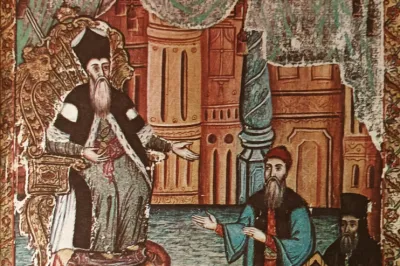
Photo: Miniature in a Cotroceni Monastery ledger, calligraphed by Dionisie Eclesiarhul, 1817 (Wikipedia)

*

This event is part of an ongoing series of public seminars organized under the ERC research project “Transnational histories of ‘corruption’ in Central-South-East Europe (1750-1850)” – TransCorr, hosted by New Europe College [ERC-2022-ADG, project 101098095 -TransCorr – European Research Council Executive Agency (ERCEA)].

New Europe College
17.11.2026
New Europe College (Plantelor 21, Bucharest) & Zoom

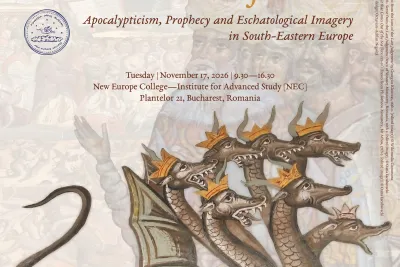
Beasts, Antichrists and the End of Times: Apocalypticism, Prophecy and Eschatological Imagery in South-Eastern Europe

This international workshop is organized within the ICUB Fellowship for Young Researchers, offered by the Research Institute of the University of Bucharest (ICUB), contract no. 13139/16.12.2025, and it is hosted by New Europe College -Institute for Advanced Study.

Convener:
Octavian-Adrian NEGOIȚĂ (NEC Alumnus), Scientific Researcher, ICUB – Research Institute of the University of Bucharest

Participants:
Mihai-Cristian AMĂRIUȚEI, Vlad BEDROS, Cristina BOGDAN, archim. Policarp CHIȚULESCU, Lidia COTOVANU, Despoina LAMBADA, Octavian-Adrian NEGOIȚĂ, Elisabeta NEGRĂU, Ovidiu-Victor OLAR, Nikolas PISSIS, Andrei PROHIN, Marinos SARIYANNIS, Aleksandar Z. SAVIĆ, Yorgos TZEDOPOULOS

Join Zoom Meeting:
https://us06web.zoom.us/j/81073968318?pwd=pVGTzEG8l5N4auQb4MW7d5C2bVHgQ…

Meeting ID: 810 7396 8318
Passcode: 477305

*

Abstract:

This workshop explores the complex and multifaceted interactions between apocalyptic thought, prophecy, eschatological expectations, biblical exegesis, and visual culture in South-Eastern Europe from the 15th to the early 19th century. Positioned at the crossroads of empires, confessions, and intellectual traditions, the region offers particularly fertile ground for examining how scriptural interpretation, prophetic discourse, and eschatological speculation intersected with political upheaval, religious reform, artistic production, and cultural exchange.

Apocalypticism, understood broadly as a mode of interpreting history through the lens of divine revelation and ultimate transformation, played a significant role in shaping the region’s religious, intellectual, and artistic life. Prophecy likewise provided a flexible language through which individuals and communities interpreted the past, made sense of contemporary crises, and imagined possible futures. In South-Eastern Europe, these traditions developed within a pluralistic environment marked by the coexistence and interaction of Orthodox, Catholic, Protestant, Jewish, and Islamic communities. The workshop investigates how different groups engaged with biblical texts—especially prophetic and apocalyptic books such as Daniel, Ezekiel, and Revelation—and how their interpretations were articulated through commentaries, historical narratives, prophetic traditions, and iconographic programs.

A central concern of the workshop is the relationship between exegesis, prophecy, and historical experience. Interpreters, writers, and artists did not approach biblical texts and motifs in isolation, but their readings and representations were deeply embedded in the political, social, and confessional dynamics of their time. Ottoman expansion, Habsburg-Ottoman conflicts, the Reformation and Counter-Reformation, dynastic change, and shifting patterns of patronage and intellectual exchange all contributed to heightened senses of historical urgency and eschatological expectation. Prophecies could be reinterpreted and adapted to explain political change, legitimize particular actors, identify enemies, or anticipate the collapse and renewal of empires and communities. The papers consider how such contexts shaped interpretations of figures and themes including beasts, Antichrists, tribulation, sacred cities, Enoch, and the end of dynasties—and how these interpretations, in turn, informed perceptions of crisis, identity, history, and destiny.

The workshop also foregrounds the transregional and transcultural dimensions of apocalyptic and prophetic thought. South-Eastern Europe functioned as a zone of intense intellectual and artistic circulation, in which ideas, texts, images, prophecies, and interpretive frameworks moved across linguistic, confessional, and imperial boundaries. Languages served as vehicles for the transmission and transformation of apocalyptic, prophetic, and exegetical traditions. By bringing together scholars working on diverse textual, historical, and visual corpora, the workshop seeks to foster a comparative perspective that highlights both shared patterns and distinctive local developments.

*

Program:

9.30-9.45
Registration and Introductory Remarks

9.45-10.15
archim. Policarp CHIȚULESCU, Anciens commentaires du Livre de l’Apocalypse conservés dans la Bibliothèque du Saint-Synode du Patriarcat Roumain

10.15-10.45
Andrei PROHIN, Andrew of Caesarea’s Commentary on the Revelation in the Slavic Manuscripts from the Romanian Lands

10.45-11.15
Aleksandar Z. SAVIĆ, The Seven-Hilled City: (Sacred) History and Prophecy in Constantine of Kostenets

11.15-11.30 Coffee Break

10.30-12.00
Nikolas PISSIS, The “Ten Days of Tribulation” (Rev 2:10): Exegetic Fortunes of an Apocalyptic Theme

12.00-12.30
Marinos SARIYANNIS, End of the Dynasty and End of Times: Ottoman Views on the Future from Eschatology to Historical Sociology

12.30-13.00
Mihai-Cristian AMĂRIUȚEI | Lidia COTOVANU | Despoina LAMBADA | Ovidiu OLAR | Yorgos TZEDOPOULOS, The Lion, the Convert and the Queen: A 1821 Painting and Its Prophetic Context

13.00-14.00 Lunch break

14.00-14.30
Cristina BOGDAN, Saint Jean dévorant le Livre: Représentations dans l’iconographie eschatologique roumaine

14.30-15.00
Elisabeta NEGRĂU, The Trial of History:  Shaping the Brancovan Church Entrance Programs

15.00-15.30
Vlad BEDROS, Revisiting the “Interiorized Apocalyptic” Tradition: A View from Inside a Moldavian Church

15.30-15.45 Coffee Break

15.45-16.15
Octavian-Adrian NEGOIȚĂ, Beasts, Antichrists and the End of Times: Georgios Koressios (cca 1570–1659/60) and His Reading of the Apocalypse of John & Concluding Remarks

Speakers and Affiliations:

Mihai-Cristian Amăriuței | Institute of History “A.D. Xenopol”, Romanian Academy
Vlad Bedros | National University of Arts & Institute of Art History “G. Oprescu”, Romanian Academy
Cristina Bogdan | University of Bucharest
archim. Policarp Chițulescu | Library of the Holy Synod of the Romanian Patriarchate
Lidia Cotovanu | Institute of History “Nicolae Iorga”, Romanian Academy
Despoina Lambada | University of Ioannina
Elisabeta Negrău | National University of Arts & Institute of Art History “G. Oprescu”, Romanian Academy
Ovidiu-Victor Olar | Institute of Habsburg and Balkan Studies, Austrian Academy of Sciences & Institute of History “Nicolae Iorga”, Romanian Academy
Nikolas Pissis | Ionian University
Andrei Prohin | Museum of Ethnography and National History, Chișinău
Marinos Sariyannis | Institute for Mediterranean Studies/FORTH in Rethymno
Aleksandar Z. Savić | University of Belgrade
Yorgos Tzedopoulos | University of Ioannina

*

This international workshop is organized within the ICUB Fellowship for Young Researchers, offered by the Research Institute of the University of Bucharest (ICUB), contract no. 13139/16.12.2025, and it is hosted by New Europe College—Institute for Advanced Study (NEC).

New Europe College
11.11.2026
NEC conference room & Zoom

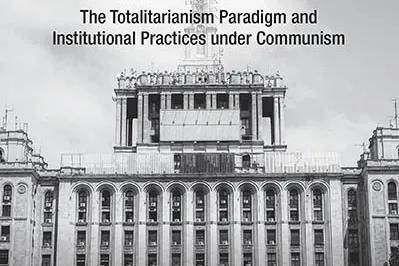
An Analytical Deadlock in the Historiography of the Soviet Bloc?

It is our pleasure to invite you to the conference An Analytical Deadlock in the Historiography of the Soviet Bloc?

A Philosopher’s Take on the Historians’ Converging Concerns with the Totalitarianism Framework

given by Manuela UNGUREANU
Associate Professor of Philosophy, Faculty of Arts and Social Sciences, University of British Columbia-Okanagan, Canada

on Wednesday, 11 November 2026, at 4 pm (Bucharest time), at New Europe College (Plantelor 21, Bucharest) & Zoom

An Analytical Deadlock in the Historiography of the Soviet Bloc?

It is our pleasure to invite you to the conference:

An Analytical Deadlock in 
the Historiography of the Soviet Bloc?

A Philosopher’s Take on the 
Historians’ Converging Concerns with the Totalitarianism Framework

given by

Manuela UNGUREANU
Associate Professor of Philosophy, Faculty of Arts and Social Sciences, University of British Columbia-Okanagan, Canada

on Wednesday, 11 November 2026, at 4 pm (Bucharest time), 
at New Europe College (Plantelor 21, Bucharest) & Zoom
 

Zoom Meeting ID: 825 1060 4212
Passcode: 300964

Zoom meeting
Abstract

Recent historiography of the former Soviet Bloc has been torn between adopting versus outright contesting the conceptual apparatus introduced by supporters of the totalitarianism theory.  Despite their different settings and the multifarious types of data they attempt to accommodate, historians raise analogous sets of questions, and propose novel social theories in their respective answers. This major axis of debate about how to interpret and explain actors’ actions or events in the former Soviet Bloc has been quite apparent in investigations led by the Potsdam school of historiography, interested in capturing people’s lives in the former DDR (see Thomas Lindenberger, Neither Consent nor Opposition: Eigen-Sinn, or How to Make Sense of Compliance and Self-Assertion under Communist Domination, 2022).

I argue that characterizations of various normative orders in social ontology help us highlight that the historians’ concern is about what has to be true of their background institutions (e.g., those whose norms emerge and/or are designed spontaneously by actors) in order for these to play a role in explaining events and situations

Short bio

Manuela Ungureanu is an associate professor of philosophy at UBC Okanagan. Born in Romania, she holds a PhD from McGill University, and has received her BA from the University of Bucharest. Her research areas include social epistemology, philosophy of language, and philosophy of social sciences. She has a research interest in communication technologies and their impact on higher education systems in Eastern Europe during the communist regimes. Manuela Ungureanu teaches courses in philosophy of mind and language, epistemology, philosophy of social sciences and literacy studies.

New Europe College
18.09.2026
New Europe College

Environmental Intelligence: Rebuilding the Foundations of AI

Sabina LEONELLI, Philosopher of Science and Professor at the Technical University of Munich, Germany

Environmental Intelligence: Rebuilding the Foundations of AI

This presentation explores the relationship between technology and nature, between the digital world and biodiversity, by investigating the impact of new technologies on climate change and social exclusion, in the awareness that technology can help mitigate environmental problems and therefore social inequalities, but that it can also aggravate them. Drawing inspiration from philosophical, historical, and social studies of the biological, medical, and environmental sciences, I build an alternative vision for artificial intelligence, and discuss various examples of collaboration between citizens, institutions, and researchers to create a digital world that truly serves the planet. A vehicle that we have used in Italy to experiment with these ideas is Pianeta Lab, a collaboration between the NGO Pianeta and the public science laboratory of the University of Munich in which we support institutions, people and communities committed and sensitive to socio-environmental issues, and mobilize a network with activities and advocacy tools towards institutions, offering skills, experiences, structure, relationships and places of discussion. Find out more at this link: www.pianeta.org

References:
Leonelli, S. Environmental Intelligence: Reframing AI from the Data Up. Manuscript under contract with Milan University Press.
Leonelli, S. (2025) Environmental Intelligence: Redefining the Philosophical Premises of AI. Harvard Data Science Review
7(4) https://doi.org/10.1162/99608f92.ac7c1504

*

This event is part of the Sixth Conference of the East European Network for Philosophy of Science (EENPS), organized by EENPS in co-operation with the Faculty of Philosophy at the University of Bucharest and New Europe College – Institute for Advanced Study. Part of the funding for the event was provided by the Botnar Foundation.

The conference program is available for download here. 

Home

Pied de page

  • Log in
  • Contact
  • Legal notice