Collegium Helveticum
Switzerland

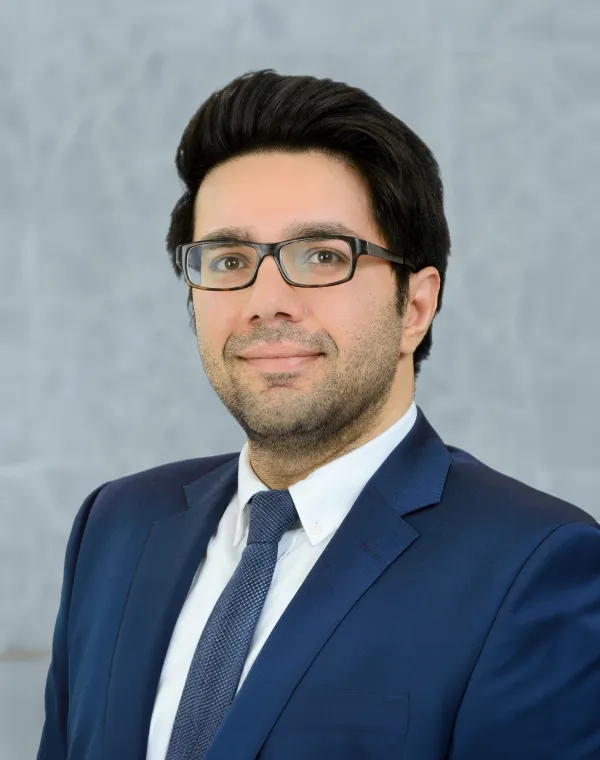
Milad Abolhasani leads a multidisciplinary research team at North Carolina State University (US), focusing on reaction miniaturization, robotics, and artificial intelligence (AI) to accelerate the discovery and production of functional materials and molecules with Self-Driving Labs (SDLs). His work spans both fundamental investigations and applied initiatives focusing on human-AI-robotics teaming up for research acceleration. He has pioneered diverse technologies that unify automation, AI, and advanced reaction engineering. Recent milestones include developing SDLs (Artificial Chemist, AlphaFlow, and Fast-Cat) to drastically reduce the time needed to identify, test, and refine new compounds for applications in clean energy and healthcare.
Milad earned his PhD from the University of Toronto (CA) in 2014 and completed a two-year postdoctoral fellowship in the Department of Chemical Engineering at Massachusetts Institute of Technology (US), before joining North Carolina State University (US) in 2016.
He currently holds the positions of ALCOA Professor and University Faculty Scholar in the Department of Chemical and Biomolecular Engineering. Additionally, he serves as the Director of Accelerated Technologies for NCSU’s Integrative Sciences Initiative.
This project leverages advanced automation, artificial intelligence, and robotics to catalyze the conversion of carbon dioxide (CO₂) into high-value chemical feedstocks, thereby advancing global sustainability goals. By integrating a self-driving laboratory with a curated library of photocatalyst materials, Milad and colleaques aim to rapidly identify and refine catalysts for highly efficient CO₂ reduction. The proposed approach combines advanced flow reactor engineering with real-time, data-driven modeling and decision-making to systematically optimize catalyst performance and reaction conditions. This innovative framework streamlines CO₂ conversion pathways, minimizes environmental impact, and drives the development of cleaner, more sustainable energy solutions.
CO₂ reduction; photocatalysis; artificial intelligence; robotics; self-driving laboratory; automation; chemical engineering; sustainable energy; carbon capture; flow reactor engineering; data-driven modelling; catalyst optimisation; green chemistry; materials science.