
Netherlands Institute for Advanced Study in the Humanities and Social Sciences
Netherlands

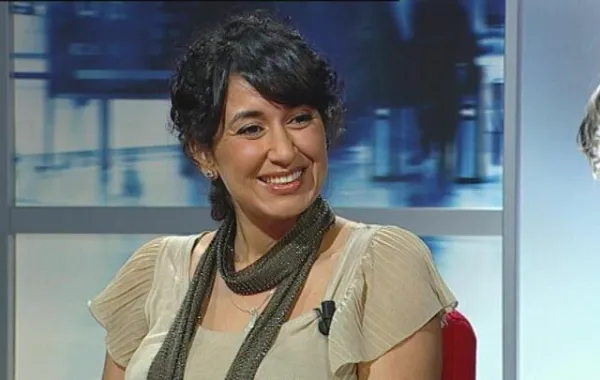
Miriyam is an Urban Citizen Fellow at NIAS during 2023-2024.
Professor Miriyam Aouragh grew up in Amsterdam as a second generation Dutch-Moroccan. She has a background in cultural anthropology and non-Western sociology (Vrije Universiteit Amsterdam) and is a researcher at CAMRI. Aouragh has studied the implications of the internet as it was first introduced (“Web 1.0”) in Palestine (PhD, University of Amsterdam, 2000-2008) to understand in particular the significance of techno-social evolutions by analysing how a "new" technology coincided with the outbreak of a mass uprising (Second Intifada 2000-2005). Aouragh subsequently (Rubicon NWO) focused on the political role of new digital tools and spaces, such as how these earlier developments evolved to so-called "Web 2.0" as manifested through blogging and social networking and so-called “Web 2.0”. Her ethnographic fieldwork were conducted among grassroots activism in Lebanon and Palestine (Oxford Internet Institute, 2009-2011). Aouragh set-up a critical research project (Leverhulme 2013-2016) to study the Arab (Counter-)Revolutions. She relates critical theory with online-offline dialects. She was selected to become TNI Fellow in acknowledgement of her public impact (2023-2028), in 2023 she won a full fellowship for the Institute for Advanced Studies to work on a review of her research on Palestinian internet spanning two decades. In 2024 she received the Swiss Foundation grant (CO-I) for the international project lnfrastructural rehearsals: creative responses to the green and digital transition.
Apart from 4 books Palestine Online (IB Tauris 2011); (with Hamza Hamouchene) The Arab Spring a decade on (TNI 2022); Mediating the Makhzan about the (r)evolutionary dynamics in Morocco (forthcoming CUP) and (with Paula Chakravartty) Infrastructures of Empire (forthcoming), Miriyam Aouragh has written numerous chapters and articles (see Publications/Output).
For over two decades Miriyam Aouragh’s research has focused on the social and political implications of information and communication technologies, particularly in Palestine and amongst the Palestinian diaspora. Her contributions to the development of ethnographic research around the internet have shed light on notions related to online communities, digital ethnography and techno-political infrastructures. Through her multi-sited and long-term ethnographic research she challenges prevailing notions underlying tech-solutionism. Whether online activism as liberatory or providing ways to avoid the false binaries of tech-politics as either allowing for analytical optimism or pessimism, her intellectual interventions have prioritised a grounded methodology in generating empirical evidence and a critical theory for understanding the larger infrastructures on which digital politics relies.
This project revisits earlier claims and observations through three key areas: 1. The changes and continuities in digital infrastructures as material and economic phenomena; 2. The changing political realities in which these materiality’s are produced and used, 3. The changing social demographics and the presence of a new generation of internet users. By reflectively examining new infrastructural developments, evolving political contexts, and different internet user generations, Miriyam Aouragh aims to deepen our ethnographic understanding of the dynamic relationship between technology, society, and politics in the digital age. Moreover, this triangular reassessment of digital transformation allows to theoretically explore the development of technology in social life throughout the short-yet-intense history of the internet.
Digital ethnography; techno-political infrastructures; online activism; Palestinian digital culture; critique of tech-solutionism