
Collegium Helveticum
Switzerland

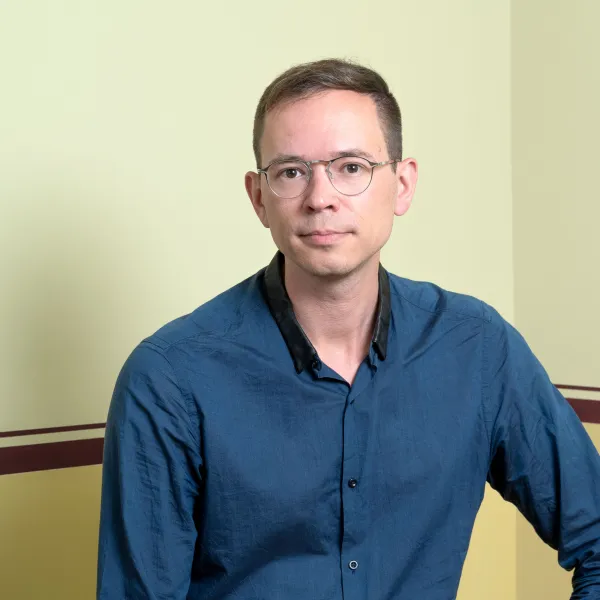
Hannes Bajohr is a philosopher, literary scholar, and poet. In recent years, he has been examining the digital conditions of language use and literary practices, with an emphasis on natural language gener- ation in the shape of stochastic machine learning. As a poet, he uses both traditional algorithms and machine learning in his practice. His most recent books are Schreibenlassen: Texte zur Literatur im Digitalen (2022), Renga Anger (2022), and Schreiben in Distanz (2023).
Before joining the Collegium, Hannes held postdoctoral positions at Berlin’s Leibniz Center for Cultural and Literary Research as well as at the University of Basel.
Currently, Hannes is a postdoctoral researcher at the Department for Media Studies at the University of Basel, Switzerland.
In his fellowship project, Hannes Bajohr reconsidered authorship in the age of artificial intelligence. With the increase in texts written not by humans but by machine learning systems, new models of authorship must account for a text’s production and its reception. This leads to questions such as: Who is involved, to what degree, and in which social and technological contexts? And who is recognized as an author by virtue of which ontological assumptions?
The project called for a two-fold approach. From the production side, Hannes argued for a “nested authorship” that addresses the relationship between preprocessing, datasets, training algorithms, and other parts of the productive apparatus. From the reception side, the project investigated the speculative phenomenon of “post-artificial” writing, that is, the conditions under which the question of whether a text was written by a human or a machine is no longer relevant. In his project, Hannes theorized artificial authorship as social recognition, connect- ing media and literary studies with sociology and computer science.
artificial intelligence; nested authorship; preprocessing; datasets; training algorithms; “post-artificial” writing