
Swedish Collegium for Advanced Study
Sweden

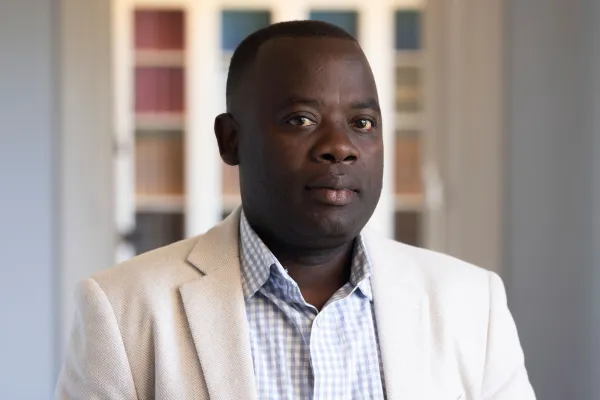
Fellow, SCAS
Associate Professor, Department of Politics, York University
Gerald Bareebe is an Associate Professor in the Department of Politics at York University in Toronto, Canada. His research and teaching focus on the comparative politics of the Global South, with particular emphasis on civil wars, authoritarianism, political violence, and post-conflict governance in Uganda, Rwanda, Burundi, and South Sudan.
He holds a PhD in Political Science from the University of Toronto, where he later served as a Provost Postdoctoral Fellow and Lecturer. He also holds master's degrees in International Relations from Makerere University, Uganda, and in Governance and Development from the University of Antwerp, Belgium.
His scholarship has appeared in leading peer-reviewed journals, including African Affairs, Civil Wars, Canadian Journal of African Studies, Commonwealth & Comparative Politics, and the Journal of Democracy, as well as in edited volumes on African and comparative politics. In 2023, with a grant from the Social Sciences and Humanities Research Council of Canada (SSHRC), he co-founded the Elite Africa Project, which runs the Elite Africa Online Database, a research resource dedicated to advancing Afrocentric scholarship.
His most recent book, Social Structures and the Making of Museveni's Civil-Authoritarian Regime in Uganda (Palgrave Macmillan, 2026), examines the political and social foundations of the resilience and longevity of President Yoweri Museveni's regime in Uganda. His forthcoming edited volume, currently in production with Routledge, explores the intersections of natural resource extraction, militarisation, and sustainability in Uganda.
As a Fellow at SCAS, Bareebe's current project investigates why and how civilians are targeted in civil wars through a systematic analysis of mass killings perpetrated by insurgent groups and state forces in northern and eastern Uganda. The study explains how political, social, and battlefield conditions converge to enable such violence, and how these dynamics shape the strategic and operational calculations through which armed actors justify, normalize, and carry out attacks against civilian populations.
This information is accurate as of the academic year 2026-27.
As a Fellow at SCAS, Gerald Bareebe’s current project investigates why and how insurgent groups and state forces deliberately kill civilians on a mass scale during civil wars through a systematic analysis of mass killings during the civil war in northern Uganda. The study explains how political, social, and battlefield conditions converge to enable such violence, and how these dynamics shape the strategic and operational calculations through which armed actors justify, normalize, and carry out attacks against civilian populations.
Political Violence; African State; Development, Authoritarianism; Post-conflict reconstruction