
Netherlands Institute for Advanced Study in the Humanities and Social Sciences
Netherlands

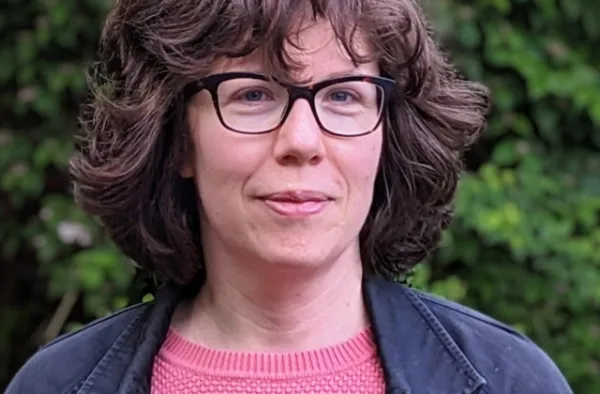
My research is motivated by my curiosity, since childhood, to understand how everything works.
To do that, I do post-disciplinary social science research using ethnomethodological approaches to practice. In other words, believe the best way to understand how the socio-material world works is to investigate the myriad of micro-level practical actions that cumulatively make it work; I am therefore more interested in what people do than what they say about what they do, and how lots of doings become something noticeable.
My current project is on the value and labor of care for housing, especially in light of migration and touristic mobilities. You can find more details about how Care Matters here and about Making Things Last here.
Thematically, I focus my research attention on people living diasporically - locating themselves between homes in 2 or more places. Specifically, I have researched about Moroccan-origin communities in Europe.
My mission is to reorient research questions about diasporic mobilities away from understandings of diasporicness as a problematic or an ‘other’ way of living, and towards investigations of how diasporic practices create commonplace and ubiquitous social worlds.
Research question: What does it look like to do ethnography in, from and with a new materialist paradigm?
New materialism has become popular in many fields as a way to explore the role of non-human and more-than-human elements. It offers a fresh perspective on how different entities interact and influence social and environmental issues. This approach is changing how we think about global challenges, like climate change, by providing a more interconnected view of the actors and relationships involved.
This project aims to examine the methodological changes that come with this new way of thinking. Focusing on ethnography as a key method suited to new materialism, Lauren Wagner asks: what does it mean to conduct ethnography within this new framework? Are diverse approaches to ethnography adapting to this paradigm, or do we need to rethink some fundamental aspects? In a world where everything is interconnected, can we develop new methods for collaborative research?
methods; knowledge; ethnography; new materialism; dispora; Moroccan-origin communities in Europe