
Swedish Collegium for Advanced Study
Sweden

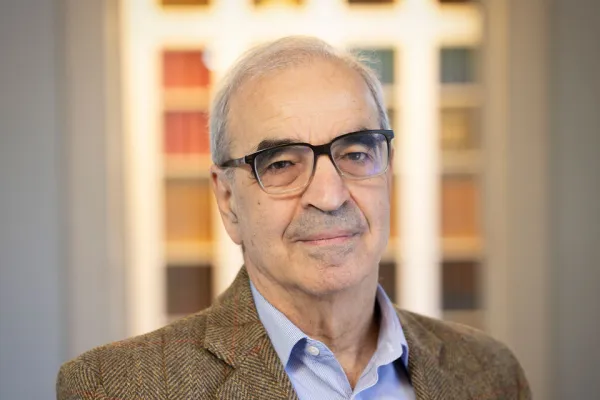
Mark Bassin is an intellectual historian whose doctoral training—at UC Berkeley—and early career were in the fields of political, cultural and historical geography. Before coming to Sweden, Bassin held faculty positions at UCLA, UW-Madison, University College London, and the University of Birmingham (UK), and he has been a visiting professor at the Universities of Chicago, Pau (France), and Copenhagen. His research has been supported by grants and personal fellowships from the Fulbright Program, NEH, NCEEER, Kennan Institute, Remarque Institute NYU, the British Academy, Leverhulme Trust, DAAD, Institut für europäische Geschichte (Mainz), American Academy Berlin, the Baltic Sea Foundation, the Slavic-Eurasian Research Center (Japan), and the Russian Ministry of Higher Education.
Bassin’s research focuses on the history of geopolitics and spatial discourses of identity and politics in Russia and Germany. His monograph The Gumilev Mystique: Biopolitics, Eurasianism and the Construction of Community in Modern Russia (Cornell UP) received an Honorable Mention in the ASEEES Reginald Zelnik Book Prize. Bassin is currently working on discourses of neo-imperialism in post-Soviet Russia, ideologies of Eurasianism, and the Putinist project of “Greater Eurasia.”
Over the past decade or so, the Putin regime has developed a strong identity discourse about Russia as a self-contained civilization, or “state-civilization”. This seminar focuses on the functional or instrumental dimension of Putinist civilizationism, namely how this discourse is constructed to rationalize and legitimize a geopolitical agenda of expansion and the projection of Russian influence across the former Soviet Union. My basic arguments are that civilizationist ideology in Russia in fact consists of multiple identitarian narratives or imaginaries, and that it is precisely thorough these more specific sub-discourses that its practical functionality is articulated and channeled. In certain respects, these narratives resonate strongly with each other, but at the same time they differ in important ways. This is particularly true in regard to the geopolitical perspectives that they project, implicitly and explicitly. In the seminar, these arguments will be explored through an examination of two leading civilizational narratives of Putinism: Russia as Eurasia on the one hand, and the Russian World on the other.
political, cultural geography; historical geography; geopolitics; spatial discourses; history; identity; politics; Russia; Germany; neo-imperialism; post-Soviet Russia; Eurasianism; ideologies; Putinism; Putinist; Russian Eurasianism