
Collegium Helveticum
Switzerland

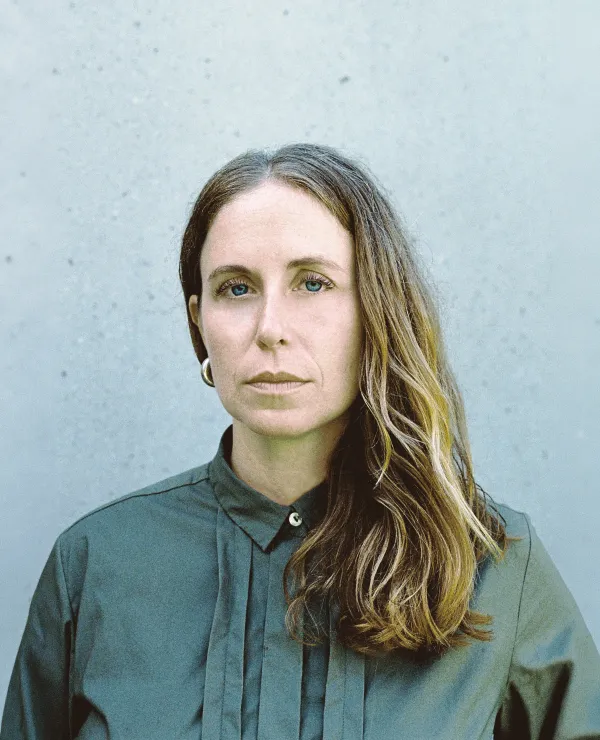
Denise Bertschi (born 1983 in Aarau, Switzerland) is an artist and researcher at the intersection of visual culture, history, and architecture. She critically investigates archives, landscapes, and the built environment on their colonial traces related to Switzerland’s extra-european expansion. Her research unfolds in installations, publications, or films and raises questions around cultural myths such as Swiss neutrality or coloniality, and their longue durée into present environmental crises.
Denise holds a PhD from the Arts of Sciences Laboratory at the Department of Architecture at EPFL Lausanne. She was awarded the Manor Art Prize in 2020 and the Most Beautiful Swiss Books in 2019 and 2022. Her work has been widely exhibited, including at the Centre Culturel Suisse Paris (FR), Swiss National Museum Zurich (CH), Fotomuseum Winterthur (CH), Swiss Art Awards (CH), Artsonje Center Seoul (KR), Artivist Johannesburg (ZA), and LACA Los Angeles (US). She has published the monographs State Fiction. The Gaze of the Swiss Neutral Mission in the Korean Demilitarized Zone (CPG, 2021) and Strata. Mining Silence (edition fink, 2020) and has co-edited the volume Unearthing Traces. Dismantiling the imperialist entanglements of archives, landscapes and the built environment (EPFL Press, 2023)
In this project, Denise Bertschi aims to trace architectural witnesses of Swiss coloniality. Based on site-specific research in the immediate neighborhood of the Collegium Helveticum Denise will use archival work and aesthetic inquiry tools. Through the lens of material and visual culture, the chemistry of dye-wood and the chemistry of photography are the guiding material traces that lead from a small-place analysis to a global colonial entanglement of Switzerland with Brazil in the 19th century concerning the history of science and Swiss nation-building in the mid 19th century. It aims to re-narrate a visual and material history of Switzerland's founding moment around 1848, when the Swiss state received its first modern constitution while simultaneously expanding its global trade with the Global South. Based on archival research and sensory fieldwork in the immediate neighborhood of the Collegium, a red thread of material and visual traces is spun that is linked to a Swiss bourgeoise elite family. Serving as an exemplary compendium, its family members' histories reveal their influence reaching concurrently into Swiss politics, military, scientific knowledge, and global capitalism between Switzerland and Brazil.
Swiss colonialism; architectural history; material culture; visual culture; archival research; artistic research; postcolonial studies; history of science; nation-building; Switzerland and Brazil; global trade.