Institute for Advanced Study at Central European University
Hungary

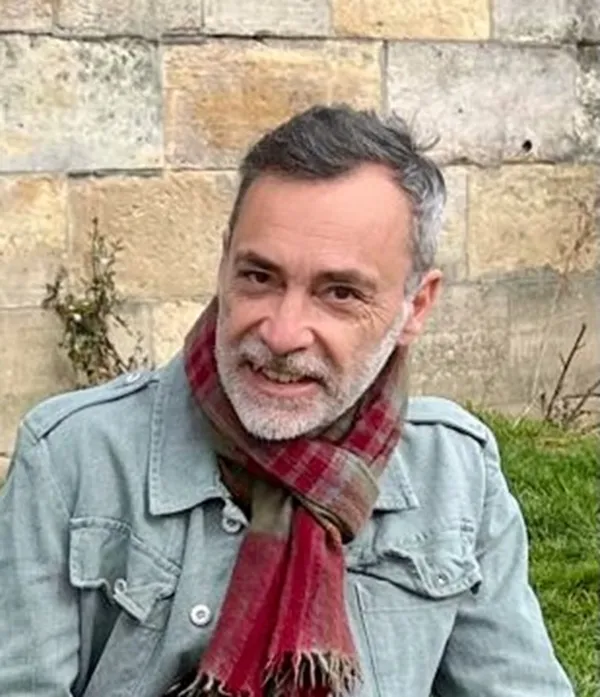
Gábor Betegh is Laurence Professor of Ancient Philosophy at Cambridge University. He is Fellow of Christ's College, Cambridge, where he is Director of Studies in Philosophy and Graduate Tutor. Betegh studied at Eötvös Loránd University, at Cambridge University (under Sedley), and at the École des hautes études en sciences sociales in Paris, under Jacques Brunschwig. His PhD dissertation was on the Derveni Papyrus. In 2004 Betegh published The Derveni Papyrus for Cambridge University Press, an edition and study of the papyrus, which won a Choice Outstanding Academic Title Award. Betegh was a professor at the Central European University in Budapest from 2001 to 2014 where he retains a visiting professorship. He was a Fellow at Harvard's Center for Hellenic Studies, the Wissenschaftskolleg zu Berlin, and the TOPOI project at Humboldt University. He has also been a visiting professor at Cornell University, the University of Florence, and the University of Rome La Sapienza.
It is only in the last fifteen years or so that analytic epistemologists have become interested in understanding as a distinct cognitive achievement. It is widely acknowledged that this interest in understanding and its difference from knowing was sparked by the work of specialists of ancient philosophy who tried to get a better grip on Plato’s and Aristotle’s concept of epistēmē. There is a phenomenon which, to the best of my knowledge, has not been discussed in the literature on understanding, and this is what I call re-understanding. For instance, you have understood the proof of Pythagoras’ theorem in school. Many years later, even if you don’t forget the justified true belief that a2 + b2 = c2, you might need to re-understand the proof again. Just as the first instance of understanding, re-understanding can come with ‘aha’ moments. In other cases, however, re-understanding also involves and requires a modified understanding. I will argue that just as to better understand what understanding is, and how it differs from knowing, Plato and Aristotle have a great deal to tell us, so also with respect to the phenomenon of re-understanding. Plato was very much alive to the phenomenon of the gradual erosion of understanding as an intrinsic part of human life and the connected need to re-understand. He offered powerful insights about how we re-connect with the objects of understanding, and what the role of written and other ‘reminders’ (hupomnēmata) and repetition or practicing (meletē) is in re-understanding. Indeed, the need for re-understanding gives a distinct motivation for a contemplative life for the individual. Yet, just as importantly, Plato argues that a political community also needs constantly to re-understand its laws, re-understanding why they are just. And just as in the case of the individual, so in the case of a political community re-understanding often comes with the need to modify and fine-tune. In my project I wish to show that we can start to re-understand the intriguing phenomenon of re-understanding using Plato’s (and Aristotle’s) texts as hupomnēmata.
Ancient philosophy; History of Religions