Collegium Helveticum
Switzerland

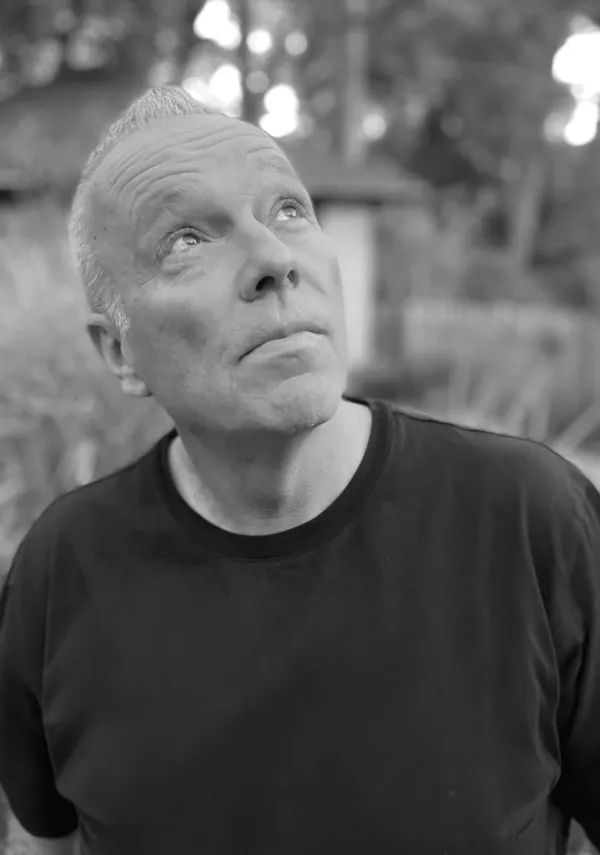
Artist-engineer Marc Böhlen (aka RealTechSupport) originally trained as a stonemason and is currently a professor of art at the University at Buffalo.
Marc is the recipient of the 2004 Artificial Life/VIDA Award, the 2014 Vilcek Prize for Creative Promise in Digital Art, and a 2023 Mellon Fellowship from the US National Endowment for the Humanities. His works have been exhibited in Germany, Switzerland, France, Austria, Spain, Croatia, Canada, the USA, Japan, Singapore, Indonesia, the Netherlands, Norway, and the UK.
In 2010, Marc received a multi-year research grant from Intel to study the impact of biosensing technologies on everyday life. Since 2020, his research has been supported in part by grants from the "AI for Earth" Initiative (Microsoft Research) and the "Climate Innovation Challenge" (Google Research). Marc Böhlen is the author of On the Logics of Planetary Computing: Geography and Artificial Intelligence in the Alas Mertajati (Routledge, 2024).
From overflowing landfills to the guarded estates of the ultra-wealthy, this project asks what these seemingly unrelated places have in common—and how excess itself reshapes the planet.
Infrastructure studies offer a framework for understanding how built systems and social structures shape cultural life, power, and human experience. This research project, led by Marc Böhlen, advances infrastructure studies by developing the concept of “infrastructures of excess”–spatial systems that produce, manage, or materially express intensification, surplus, waste, and unequal accumulation. By examining sites ranging from uncontrolled landfills and engineered abundance of massive theme parks to the secluded estates of the global ultra-wealthy, the project argues that these divergent landscapes are linked by shared logics of privilege, security, and environmental stress. Methodologically, the project integrates satellite imagery and geospatial analytics with machine learning and generative AI to identify and compare these sites at a planetary scale. Ultimately, this work develops novel interdisciplinary methods to describe human impact on planet Earth.
built systems; social structures; cultural life; infrastructures