
Netherlands Institute for Advanced Study in the Humanities and Social Sciences
Netherlands

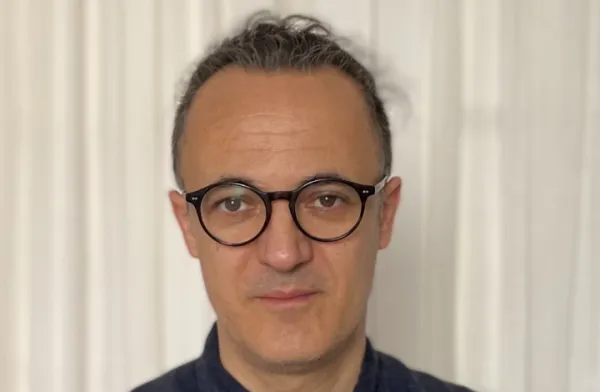
Aleksandar Bošković is Lecturer in Bosnian-Croatian-Serbian at the Department of Slavic Languages and Literatures. He received his Ph.D. in Slavic Studies from the University of Michigan (2013) and M.A. in Comparative Literature and Literary Theory from the University of Belgrade (2007). Before coming to the States, he was a research fellow at the Institute of Literature and Art in Belgrade (2003-2008), where he worked on the project of Serbian literature of the XX century. He is the recipient of several grants and fellowships, including Collegium de Lyon Fellowship (2019-2020) and Michael I. Sovern/Columbia Affiliated Fellowship at the American Academy in Rome (2023-24). His research has been supported by the Harriman Institute.
Bošković is a scholar of Russian and East European modernism, Yugoslav, post-Yugoslav and Balkan Studies, with a strong background in comparative literature, critical theory, and visual studies. He specializes in avant-garde literature and experimental art practices explored through the lenses of comparative media. He is currently working on a project entitled Nothing (:) Made in Yugoslavia, which investigates the relationship between negation practices across different arts and media in the former Yugoslavia—literature, film, visual arts, radio—and the notion of artistic value. He is also completing a book manuscript entitled Constructivist Cinépoetry Book, which explores the notion of cine-dispositive in relation to the early Soviet agit-poetry books illustrated by photomontage.
Research question: How artworks articulate values?
Aleksandar Bošković studies experimental art from the former Yugoslavia, focusing on how these creative practices – across literature, film, visual arts, and radio – express decolonial aesthetics and its radical epistemologies.
At the core of these practices is a compelling idea: that “nothing” can help us rethink how value is created. His research demonstrates how, using techniques of refusal and negation, Yugoslav artists reframe the question of value and offer new ways of imagining future cultural narratives.
Radical Yugoslav art practices, Bošković argues, remind us that the same principle applies to both post-Balkan and European contexts: such a culture is founded not on identity but on responsibility.
Decolonial aesthetics in Yugoslav art; negation and refusal as artistic techniques; value creation through experimental art; post-Balkan cultural responsibility; radical epistemologies