
Netherlands Institute for Advanced Study in the Humanities and Social Sciences
Netherlands

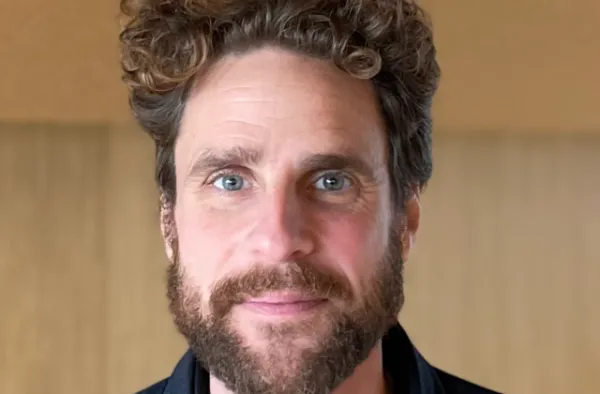
John was an Urban Citizenship Fellow at NIAS during 2024-2025.
I am a tenured assistant professor of sociology at Leiden University in the Netherlands, where I coordinate the d12n Research Cluster and teach classes on research ethics, ethnographic fieldwork, and social and cultural theory. I am affiliated with Leiden University’s Institute of Cultural Anthropology and Development Sociology as well as the Leiden–Delft–Erasmus interuniversity consortium’s Center for BOLD Cities. During the 2024–25 academic year, I was a fellow at the Netherlands Institute for Advanced Study in the Humanities and Social Sciences.
My research investigates the interface between digital technologies and social life. I employ a wide range of research methods, including participant observation, computational techniques, and interviews, and I contribute to an interdisciplinary social-scientific literature spanning sociology, anthropology, urban studies, and media studies.
Prior to joining Leiden University, I was a postdoctoral researcher in sociology at the University of Amsterdam. I received my PhD in sociology (with a certificate in women’s studies) from the City University of New York in 2015.
Research question: What critical technical practices are technologists in Amsterdam experimenting with, and how can they enable meaningful citizenship in the city?
Amsterdam has long been a focal point for critical technical practices due to its history as a hub for DIY approaches to digital networks. Hacklabs, civil society organizations, art academies, and academic centers and labs in the city are breeding grounds for new imaginaries and serve as important sites for experimentation with new practices.
Scholars have documented cases of contemporary experimentation by critical technologists in cities like Barcelona, but we lack detailed situated knowledge of critical use of computing in the city and how it is evolving.
John D. Boy hopes to understand practices that have been getting increased attention recently, such as community servers and permacomputing. These practices frequently complicate how critical technologists relate to the free and open source software (FOSS) movement, long a frame for critical technical practice, also by providing the vision of an “open source city.”
Boy will map emerging critical technical practices through ethnographic fieldwork with various communities of practice, and explore ways these practices can contribute to equitable digital infrastructures in the city in conversation with municipal officials.
interface between digital technologies and social life; citizenship; technology; community; activism; digital hubs; permacomputing