
Netherlands Institute for Advanced Study in the Humanities and Social Sciences
Netherlands

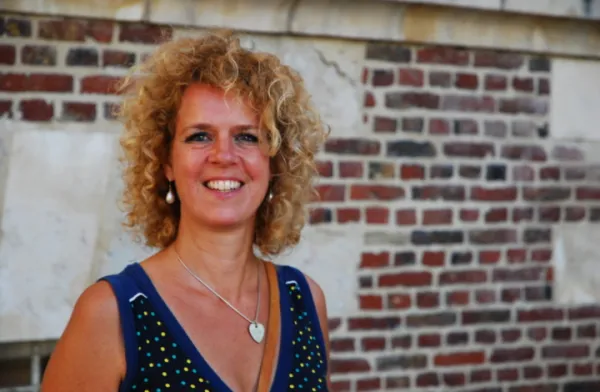
Hilde Bras is Professor of Economic and Social History, with special attention to Global Demography and Health at the History Department of the University of Groningen. Her current research focuses on long-term changes in reproduction and health in sub-Saharan Africa. She earned a Master’s degree (hons) in American Studies (1993) from the University of Groningen and a PhD in Sociology (2002) from Utrecht University. Bras has published on fertility, nutrition and health, gender and social inequalities, marriage, migration, and long-term shifts in family and kinship relations in, amongst others, Continuity and Change, The History of the Family, Demography, Population Studies, Demographic Research, Journal of Biosocial Science and Annals of the New York Academy of Sciences. From 2011 to 2016 she led the NWO-funded VIDI-project “The Power of the Family. Family Influences on Long-Term Fertility Decline in Europe, 1850-2010”. Bras is an elected member of the Social Sciences Council (Sociaal-Wetenschappelijke Raad) and alumna of De Jonge Akademie of the Royal Netherlands Academy of Arts and Sciences. She is a Senior Research Associate of the Global Data Lab (Radboud University), Chair of the Nominating Committee of the Social Science History Association (2020-2021), board member of the Historical Sample of the Netherlands (HSN), and editorial board member of the The History of the Family.
Research question: How did Catholic missionaries shape reproductive health, gender roles, and demographic change in Southeast Africa from 1890 to the present?
As the global population is projected to rise from 8.2 to 10.2 billion by the end of the century—driven largely by growth in sub-Saharan Africa—historians and demographers are re-examining the colonial and postcolonial roots of African demographic change.
Hilde Bras’s project contributes to this debate by centring reproductive health and gender dynamics in Southeast Africa from 1890 to the present. Focusing on four local communities with Catholic mission hospitals, the project investigates the long-term demographic impact of missionary medicine and cultural interventions in women’s intimate lives.
Drawing on diaries, annual reports, parish registers, and patient records, Bras explores how biomedical practices and family models introduced by missionaries intersected with local norms to reshape social roles, healthcare access, and reproductive outcomes.
By tracing these legacies across the twentieth and early twenty-first centuries, the project offers new insights into the historical roots of health disparities and demographic change in Africa.
Historical demography; History of medicine, health and healing (incl. history of nursing & history of psychiatry); Reproductive, maternal and child health; Gender and social inequalities; History of family and kinship relations; sub-Saharan Africa