
Hamburg Institute for Advanced Study
Germany

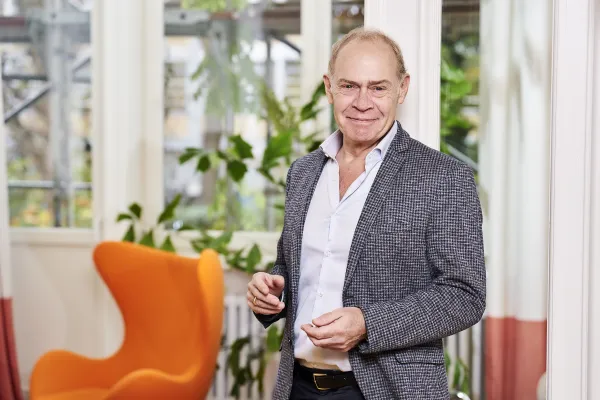
Warren Breckman is the Sheldon and Lucy Hackney Professor of History at the University of Pennsylvania, where he teaches modern European intellectual and cultural history.
He is the author of Adventures of the Symbolic: Postmarxism and Radical Democracy (2013; paperback, 2014), European Romanticism: A Brief History with Documents (2008; new edition, 2014), and Marx, the Young Hegelians and the Origins of Radical Social Theory: Dethroning the Self (1999; paperback edition, 2001). He co-edited The Cambridge History of Modern European Thought (2 vols, 2019; paperback edition, 2021) with Peter E. Gordon. From 2006 to 2016, he served as executive editor of the Journal of the History of Ideas and is currently president of JHI, Inc. He was a founding member of the Arbeitskreis of the Zeitschrift für Ideengeschichte (2006–2023).
His previous fellowships include appointments at the American Academy in Berlin (Siemens Fellow, 2013), the Alexander von Humboldt Foundation (2004), the Princeton Institute for Advanced Study (2001–2002), and the École des Hautes Études en Sciences Sociales.
During his fellowship at HIAS, Breckman is working on a book tentatively titled A Horse Soldier in the Great War. The project weaves together a microhistory of his grandfather, Canadian cavalryman George Hambley, based in Hambley’s wartime diaries, with broader reflections on the culture of the early twentieth century and the complexities of family memory.
Spanning 20 volumes written between 1915 and 1920, the diaries chronicle daily life on the Western Front and the postwar occupation of the Rhineland. The diaries are not only an extraordinary and unbroken chronicle of daily experience on the Western Front, including a detailed account of the victors’ occupation of the Rhineland; the diaries include poetry, drawings, philosophical reflections, and spiritual meditations.
In brief, they capture the worldview of a late Victorian man on the cusp of twentieth-century modernity, trying to cope with the emotional and intellectual upheavals of the Great War and wrestling with the anachronism of going to the Western Front on horseback. Breckman will endeavor to capture this sensibility and weave it into a narrative that cuts between the time of WWI and our present.
The intersections of politics, religion, and aesthetics; early modern philosophical traditions; First World War