
Netherlands Institute for Advanced Study in the Humanities and Social Sciences
Netherlands

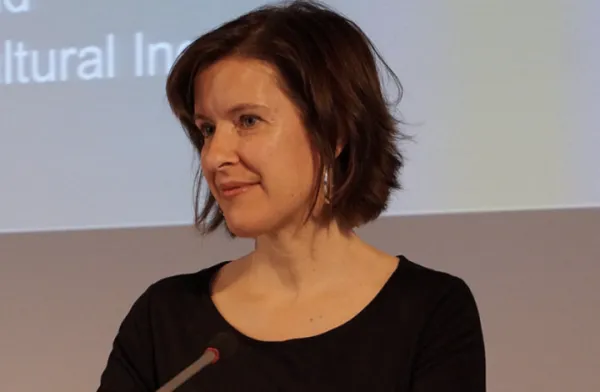
Tita Chico is a scholar and teacher of British literature of the long eighteenth century.
Professor Chico’s current book project, Devices of Enlightenment: A Literary History of Technology, argues that 17th- and 18th-century devices—physical and conceptual objects in literature and science—present a pressing opportunity to understand the comingling of Enlightenment technological and imaginative practice. Drawing on the definition of a device as both a “design” and a “scheme formed; project; speculation,” I argue that the concept of “device” has an important technological and literary history in the long 18th century (c. 1660-1800), one that also imagines its own future. A device is at once an object and a process with a duration; as such, a device facilitates distinctions constitutive of intellectual, cultural, and social value. The tired and, frankly, misleading binary of objective and subjective, technological and literary limits our understanding of how knowledge emerges and circulates, whether in the past or now. Devices of Enlightenment challenges this disciplinary divide by showing the mutually constitutive logics of early technology and literature embedded in the concept of the device.
Professor Chico has received various grants and fellowships to support her work, including the Bristol Benjamin Meaker Distinguished Visiting Professorship (UK); Senior Global Fellowship at St. Andrews University (UK); Visiting Fellowship to New College, University of Oxford; the Senior Research Fellowship, Queen Mary Centre for Eighteenth-Century Studies (London); Visiting Fellowship, Chawton House Library and Research Centre (UK); Visiting Research Fellowship, Institute of English Studies at the School for Advanced Study, University of London (UK); the ASECS / The Andrew W. Mellon Foundation Research Fellowship, Harry Ransom Center; the Mellon Postdoctoral Research Fellowship; and the Ford Foundation Scholarship. Twice, she has been honored with the Kandice Chuh Mentorship Award. She has also been named a Maryland Research Excellence Honoree and a recipient of the Faculty Service Award.
On campus, she has served as Faculty Director of the Center for Literary and Comparative Studies, Associate Director of Graduate Studies, Director of Placement, Faculty Director of the Theory Certificate Program, and Associate Dean of the Graduate School. Professor Chico is a member of the ASECS executive board.
Research question: Devices seem to be a ubiquitous feature of modern life, shaping who and what we can be. But what is a device and why does it matter to understanding British Enlightenment--and today?
Tita Chico explores the intertwined history of technology and literature at the core of what we now recognise as the modern “device”.
In the long eighteenth century (c. 1660–1800), the concept of the “device” was understood both as a “design” and a “project”. During this period, it reflected a deep interweaving of Enlightenment-era technological innovation and imaginative literary practice—an interplay with far-reaching ethical and cultural consequences.
Chico’s research examines a wide range of materials: microscopes and minute observations; encyclopaedias and dictionaries; anatomical studies and library systems; mathematics and periodicals; early language machines and questions of authorship; thermometers and landscape poetry (such as the Georgic tradition). Through this interdisciplinary lens, she argues that devices of the eighteenth century fundamentally transformed intellectual and literary production. In doing so, they helped to construct new “truths” about the world—truths that both enabled and constrained emerging ideas of identity, community, and human agency.
By uncovering how eighteenth-century devices shaped knowledge, identity, and authority, Chico’s work offers critical insights into the ways today’s technologies—such as algorithms, digital platforms, and AI—continue to structure our understanding of truth, agency, and collective life.
Film Studies and Cultural Studies; Literary Theory; Literature and Science; Restoration and 18th Century; Devices and Enlightenment thought; technology-literature interplay; eighteenth-century knowledge production; historical epistemology of instruments; genealogy of modern digital technologies