
Netherlands Institute for Advanced Study in the Humanities and Social Sciences
Netherlands

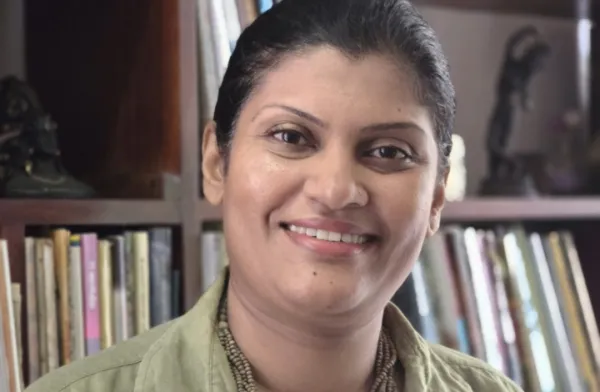
Dr. Ganga Rajinee Dissanayaka doesn’t just study the past,she interrogates it, liberates it, and demands it answer for itself.
As a leading ethnographer and art historian, she has built her distinguished career on a singular conviction: that every temple wall, every carved deity, every museum artifact contains multitudes,stories of power, resistance, devotion, and the communities who created meaning through material culture.
Decoding the Sacred: 17th-Century Image Houses as Political Texts
Her pioneering research into 17th-century Sri Lankan Image Houses reveals what others have overlooked: these sacred spaces were never merely religious. Through rigorous participatory research methodology, Dr. Dissanayaka exposes how temple architecture functioned as sophisticated political discourse—where iconographic choices became ideological statements, where spatial arrangements encoded social hierarchies, and where devotional art masked (and revealed) contests for authority.
This is ethnography as archaeology of power. This is art history that refuses to be neutral.
From World Bank Projects to Repatriation Battles
Dr. Dissanayaka’s expertise transcends academic silos. Her work has shaped:
Her research on the LEWKE Cannon, published in The Rijksmuseum Bulletin, exemplifies her scholarly approach: meticulous, multilayered, and unafraid to challenge institutional narratives about how objects traveled from colonies to collections.
The Public Intellectual: Writing Beyond the Ivory Tower
While many academics speak only to each other, Dr. Dissanayaka actively bridges scholarship and public consciousness:
In the Classroom: Igniting Critical Consciousness
As a visiting lecturer at the University of Visual and Performing Arts and the University of Kelaniya, Dr. Dissanayaka is celebrated for transforming how students encounter cultural heritage and research methodology. Her pedagogy reflects her research philosophy: knowledge emerges through dialogue, history is contested terrain, and studying the past is always a political act with contemporary consequences.
Current Projects: Decolonizing Knowledge Systems
Dr. Dissanayaka’s latest work addresses the most urgent questions in heritage studies:
Transforming History Education
She’s developing a teacher’s guide for government schools that revolutionizes how Sri Lankan children learn their own history—using museum artifacts as entry points to critical thinking rather than mere nationalist mythology.
Colombo in Colonial Context
Her newest research project excavates the layered histories of Colombo under colonial rule, revealing how urban space itself became a site of cultural erasure, resistance, and hybrid identity formation.
Trade Routes as Cultural Superhighways
Exploring the intricate relationships between trade networks, Buddhism, and artistic exchange—particularly through Trincomalee Harbour and East Asian connections-Dr. Dissanayaka maps how religious ideas and material cultures traveled, transformed, and took root in unexpected places.
Ethnographic Collections and Their Contested Histories
She investigates the provenance of ethnographic materials in global museums, asking uncomfortable but essential questions: How did these objects leave Sri Lanka? Whose consent was never sought? What narratives were constructed to justify their removal?
Discourse Communities and the Politics of Artifacts
Dr. Dissanayaka’s commitment to multidisciplinary research is evident in her engagement with discourse communities—examining how different groups (colonial administrators, Buddhist clergy, local artisans, museum curators) constructed competing meanings around the same cultural objects. This approach reveals that heritage is never singular or stable, but always multiple, contested, and alive with political possibility.
A Legacy of Reclamation
In an era when museums worldwide reckon with colonial legacies, when cultural repatriation becomes urgent ethical imperative, and when heritage education demands decolonization, Dr. Ganga Rajinee Dissanayaka stands at the forefront.
She is the scholar who insists that objects have biographies and museums have responsibilities. She is the public intellectual who refuses to let academic knowledge remain cloistered. She is the educator reimagining how the next generation encounters their own cultural inheritance.
Dr. Dissanayaka doesn’t just preserve heritage—she liberates it from the narratives that have constrained it, and returns it to the communities who created its meaning in the first place.
Ganga is a NIAS NIOD KITLV fellow during 2025-2026.
Ganga Rajinee Dissanayaka’s research examines Sri Lankan ivory boxes, jewellery, and statues held in the Rijksmuseum and the Wereldmuseum in the Netherlands. She explores their historical journeys, political entanglements, social impact, and aesthetic value to inform discussions on cultural mobility, provenance, and restitution.
Using a multidisciplinary approach—including material analysis, iconographic interpretation, and object-based study—Dissanayaka uncovers the layered histories of these artefacts. By situating them in their wider historical and cultural settings, she traces their interactions with individuals, communities, and institutions.
Her work not only contributes academically but also has strong social relevance. It addresses colonial legacies in museum collections and supports broader conversations about Sri Lanka’s socio-political past, cultural justice, and ethical heritage management. By engaging with restitution debates, Dissanayaka helps to decolonise museum practices and foster dialogue between Sri Lanka and the Netherlands, promoting reconciliation and shared understanding. Her research ultimately highlights heritage’s vital role in collective memory and social cohesion.
Museum provenance and restitution; Sri Lankan material culture; decolonizing heritage collections; cultural mobility and object biographies; ethical museum practice