Collegium Helveticum
Switzerland

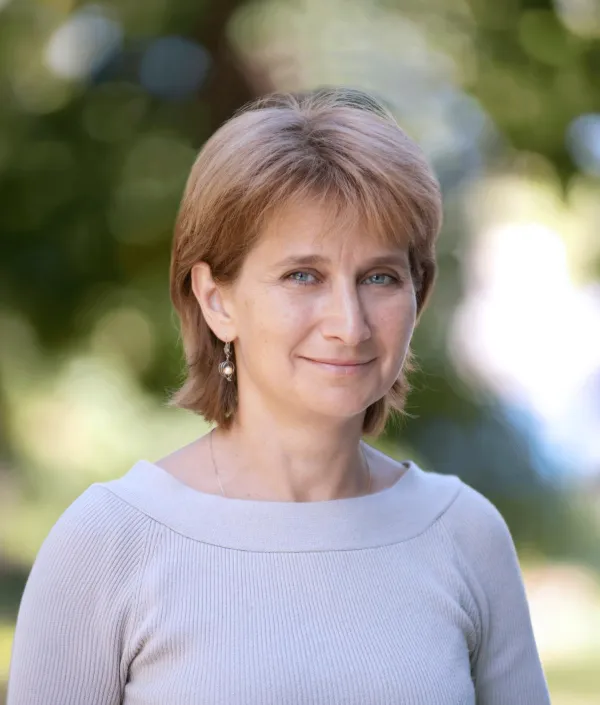
As Professor of Biogeochemistry at the University of Toronto Scarborough, Maria Dittrich is an expert in carbon and nutrient biogeochemical processes in lakes and coastal areas, especially at the sediment-water interface.
After a master’s degree in physics and work experience, Maria Dittrich was awarded a PhD in aquatic biogeochemistry. During her career, Maria has initiated several projects on microbial-driven carbonate precipitation, the fate of nanoparticles, and reactive-transport modelling in ecosystems. The Maria Dittrich research group at the University of Toronto uses a combination of field, laboratory, and modelling techniques, including in-situ state-of-the-art microscopy tools.
In 2023, Maria Dittrich received a prestigious Katharine van Sallis fellowship for her scientific achievements in geobiology from ETH Zurich, the Swiss Federal Institute of Technology. She serves as an associated editor for the Journal Geo-Bio Interfaces (Cambridge University Press), the Journal of Limnology (Japanese Society of Limnology), and Chemical Geology (Elsevier). Moreover, Maria Dittrich is actively involved in the International Society of Environmental Biogeochemistry and the Geochemical Society.
The cement industry is a major contributor to global greenhouse gas emissions. It is responsible for approximately 6 % of total global CO₂ emissions, with direct process and energy-related emissions reaching 2.4 Gt CO₂ in 2023. This footprint makes cement one of the largest “single emitters” globally. Microbial carbonate precipitation, particularly microbial-induced carbonate precipitation (MICP), represents a promising alternative route to cement production.
This project will integrate microbiology, geochemistry, and materials science to:
Expected outcomes include a proof-of-concept for bio-cement, data on CO₂ sequestration efficiency, and insights into scaling this technology by modelling efforts. By using cyanobacteria native to Lake Greifen (Greifensee), this project seeks to develop a locally adapted, scalable bio-cement system that leverages photosynthetic CO₂ capture and biomineralization—offering a sustainable alternative to conventional cement.
materials science; microbiology; geochemistry; biogeochemistry; sustainable construction; cement industry; CO₂ emissions; carbon sequestration; microbial-induced carbonate precipitation (MICP); cyanobacteria; biomineralization; bio-cement; climate change mitigation; green technology; industrial ecology; photosynthesis; lake ecology; scaling and modelling; environmental engineering; circular economy.