
Netherlands Institute for Advanced Study in the Humanities and Social Sciences
Netherlands

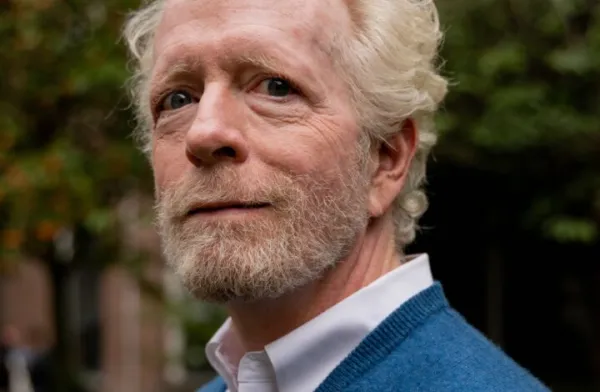
Frank Dobbin received his BA from Oberlin College in 1980 and his PhD from Stanford University in 1987. Dobbin studies organizations, inequality, economic behavior, and public policy. His 2009 book Inventing Equal Opportunity shows how corporate personnel managers defined what it meant to discriminate.
His evidence-based research on corporate diversity programs (with Alexandra Kalev) shows that mentoring programs, diversity taskforces, and special recruitment programs have helped to promote diversity by engaging managers, while diversity training and diversity performance evaluations have thwarted progress by stigmatizing managers. These findings have been covered by The New York Times, The Washington Post, The Boston Globe, Le Monde, CNN, and National Public Radio. Dobbin has published numerous books studying the social construction of economic rationality, including Forging Industrial Policy: United States, Britain, and France in the Railway Age (1994) and The Global Diffusion of Markets and Democracy (2008). Recent research examines rise of the shareholder value model of corporate management.
While colleges and universities no longer formally prohibit women and people of color from joining the faculty, recent research shows that those groups continue to face institutional barriers. Slow progress on integrating the professoriate, moreover, is undermining confidence in the university as a meritocratic institution. Meanwhile the paucity of diverse role models in the professoriate discourages women and people of color from pursuing careers in academia and undermines the academic confidence of students from those groups.
Frank Dobbin will spend the fall of 2024 working on a book, with Alexandra Kalev of Tel Aviv University, that will provide the first systematic evidence about the efficacy of faculty diversity initiatives: hiring, promotion, diversity, and work-life programs.
The American university system provides an exceptional experimental laboratory because each university chooses its own policies in these areas, so there is great variance in programs over time that can be leveraged in statistical models. They have obtained annual federal data on the composition of faculty at U.S. universities and on individual career histories of over 10,000 faculty. Meanwhile they have surveyed 670 universities on the history of their hiring, promotion, diversity, and work-life programs and policies. With data for the period 1993-2017, they are analyzing the effects of dozens of different policies on the professoriate.
Their analyses suggest that many of the most popular programs, such as diversity and harassment training and grievance processes, have null or negative effects, leading to decreases in faculty diversity. But other simple measures, such as targeted hiring, formal mentoring, diversity task forces, and work-life initiatives show robust positive effects on faculty diversity.
The promise of the project is that it will help universities around the world to identify programs that will help them to build faculties that mirror their populations.
Comparative/historical sociology; organizational theory; economic sociology; public policy; stratification