
Netherlands Institute for Advanced Study in the Humanities and Social Sciences
Netherlands

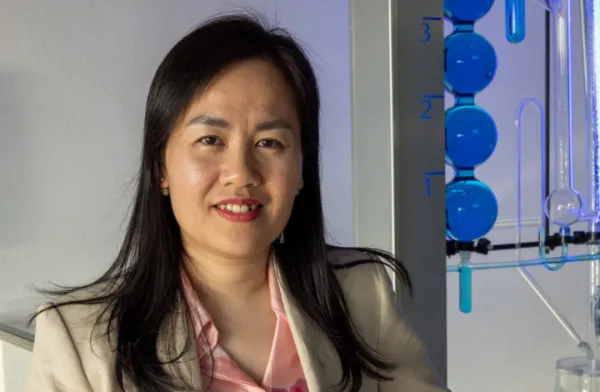
Trang is a L’Oréal-UNESCO For Women in Science Fellow at NIAS during 2025-2026.
Dr. Duong is engaged in education activities including teaching, supervision of BSc, MSc and PhD students; in both research and commercial projects as both an expert and as project leader; and in project acquisition. Her areas of expertise include modelling of climate change impacts on coasts, coastal dynamics (hydrodynamics & morphodynamics), tidal inlet processes, coastal hazards (flooding and erosion), at different spatio-temporal scales, using multi spatio-temporal scale process based numerical, reduced complexity and probabilistic models. Her research interests include climate change impacts on coasts, coastal hazards due to extreme events, coastal land subsidence and nature-based solutions for adapting to climate change in coastal areas.
Coastal flooding caused by extreme sea levels (ESL) is one of the most significant hazards threatening coastal communities. ESL, the combination of sea-level rise (SLR), tides, storm surges, and wave effects results in severe coastal flooding, leading to massive property damage, infrastructure loss, and even fatalities. With climate change accelerating, the frequency and severity of coastal flooding events are projected to increase dramatically. The Intergovernmental Panel on Climate Change (IPCC) AR6 report confirms, with high confidence, that coastal flooding will intensify in almost all global regions by mid-century, emphasizing the urgent need for adaptation strategies.
Trang Duong’s research focuses on understanding the future flood impacts of extreme events like storm Xynthia, a severe extratropical cyclone that hit France in 2010, causing extensive flooding. Utilizing advanced numerical modeling, she aims to assess the future flood damages that would occur if Xynthia were to strike France again in the future; and evaluate the most effective additional flood protection measures to mitigate future damages, considering their effectiveness in reducing the number of people affected and the extent of property damage.
This study will support policymakers and local stakeholders in decision-making processes, contributing to climate-resilient coastal management strategies. The research aligns with the broader global efforts to mitigate climate change impacts and will play a critical role in shaping climate adaptation policies and ensuring a sustainable future for coastal populations.
Extreme sea level modeling; coastal flood risk assessment; climate change adaptation; flood protection infrastructure; coastal resilience planning; Climate Change; Sea Level Rise; Coast; Tidal Inlet; Model; Stability; Estuary