
New Europe College
Romania

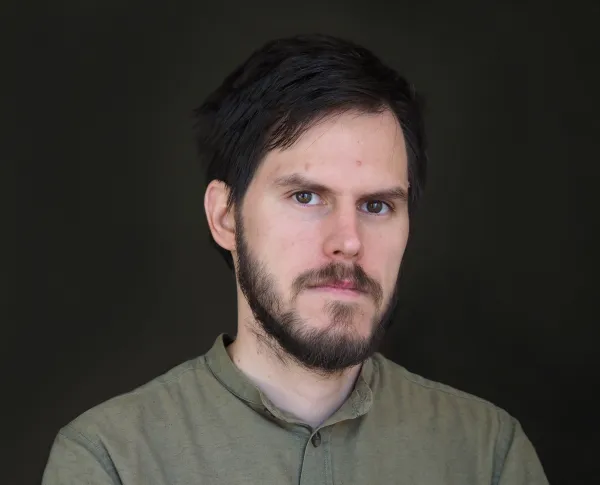
“Ștefan Odobleja” Fellow
Teaching Assistant, “Ion Mincu” University of Architecture and Urban Planning
Curator, The National Museum of the Romanian Peasant
Bucharest developed outside Western urban models, as a merchant city without fortifications and in continuity with its rural surroundings. This trajectory produced a vernacular urban configuration: fragmented and polycentric, rooted in proximity, kinship networks, and forms of self-regulation. Despite the progressive imposition of the modern urban project from the nineteenth century onward, this alternative urban culture appears to have endured through spontaneous, improvised and community-based uses of space.
Contrary to common interpretations that reduce the informal to a provisional, marginal, and amnesic phenomenon, this research project advances the hypothesis that in Bucharest a premodern local urban culture persists precisely through certain contemporary informal spatial practices. These include unplanned uses, adaptations, small-scale landscaping and gardening, building transformations or even entirely improvised structures, forms of community organization, and everyday survival tactics.
Over time – both in the present and historically, as soon as administrative bureaucracy began shaping urban development – this form of local built culture has progressively retreated to the margins of official urbanization, in peripheral zones and interstitial spaces. It is therefore particularly compelling to examine this phenomenon, its recurrences and forms of continuity, through a critical comparison between official representations of the city (such as administrative maps and regulatory frameworks) and alternative, perhaps less power-driven perspectives on the urban environment.
The project seeks to develop an analytical method for identifying traces of this historical continuity through concrete case studies. It will clarify the defining features of this local urban culture – as they evolved through contact, friction, collaboration and entanglement with the Western modern city project – and will then conduct a comparative analysis between these historical expressions and the typology of contemporary informal spatial practices established in earlier research.
Architecture; Urban Studies