
Institute for Advanced Study at Central European University
Hungary

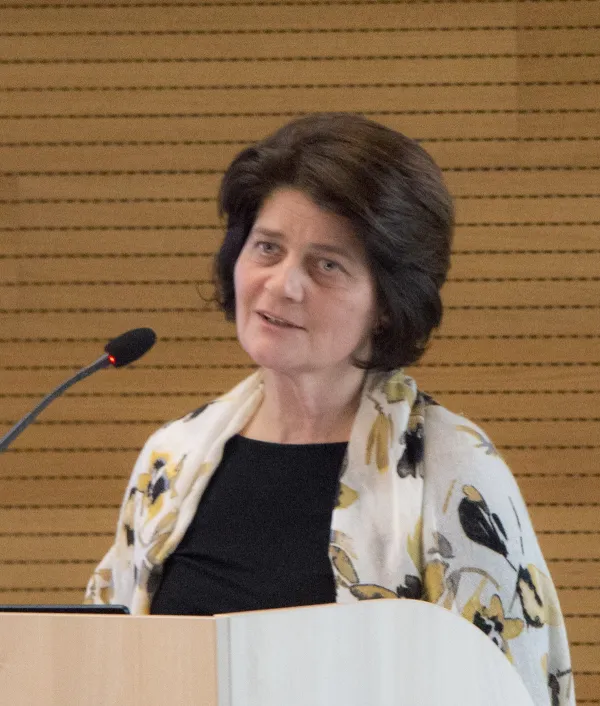
Margit Feischmidt is research professor at ELTE Centre for Social Sciences. She is also editor in chief of Intersections. East European Journal of Society and Politics and teaches as full professor at Institute for Communication and Media Studies, University of Pécs. With a doctoral degree from Humboldt University and habilitation from her home university she works on issues of migration, nationalism, ethnicity and minorities in East-Central Europe and generally. Her first important publication was Nationalist Politics and Everyday Ethnicity in a Transylvanian Town (2006, Princeton University Press) co-authored with Rogers Brubaker, Jon Fox and Liana Grancea. After years working mainly on Roma and immigrant minorities in the region, she currently investigates new forms of nationalism, racism and the far-right and published a monograph on new nationalism and popular culture in Hungarian as well as several journal articles which includes “Memory-Politics and Neonationalism: Trianon as Mythomoteur.” Nationalities Papers 48: 130–143; Rocking the nation’: the popular culture of neo-nationalism. Nations and Nationalism (co-author: Gergő Pulay) and Understanding the rise of the far right from a local perspective: Structural and cultural conditions of ethno-traditionalist inclusion and racial exclusion in rural Hungary. Identities. Global Studies in Culture and Power (Co-author Kristóf Szombati). Her most recent edited book (coeditors Ludger Pries and Celine Cantat) is on civic forms of solidarity (Refugee Protection and Civil Society in Europe, Palgrave Macmillan, 2019).
The project aims to contribute to the understanding of nationalism in the context of the rise of the far right, the expansion of populist authoritarian regimes, and, most recently, in connection with resistance and revolt against illiberal autocracy, using Hungary as a case study. As part of this effort, I wish to complete a chapter of a book using the results of a recent empirical investigation on modalities of resistance and rebellion in spaces of civic solidarity, framed in nationalist terms. The ultimate objective is to complete a book manuscript that provides an empirically grounded and theoretically stimulating account of political conditions, the cultural construction, and the social resonance of new forms of nationalism in the 2010s and 2020s. Most importantly, it aims to understand how this authoritarian turn has created and deployed nationalist myths, symbols and narratives. Ultimately, and keeping the research as relevant to the present as possible, it is also seeking to understand what kind of nationalist rhetoric and framing political and cultural opposition of the authoritarian regimes takes on.
nationalism; national culture; cultural memory; multiculturalism; recognition policy; identity policy; Migration; transnational mobility; Social solidarity; volunteering; Racism; interethnic conflicts; Roma minority community; Hungarian minority community; Central Europe; Eastern Europe