
Netherlands Institute for Advanced Study in the Humanities and Social Sciences
Netherlands

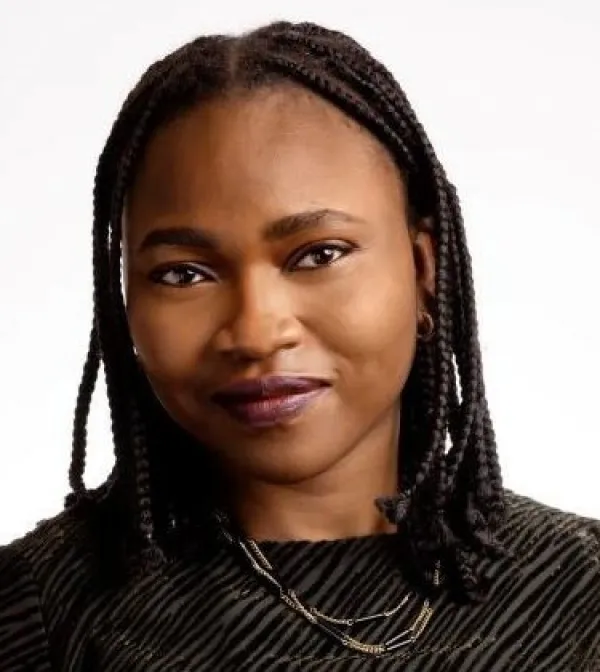
Abosede George is a historian of Modern Africa. She earned her BA in History and Political Science at Rutgers University(1998), her MA in history at Stanford University(2002), and her PhD also in History at Stanford University(2006). Prior to joining Barnard College, Dr. George was Assistant Professor of History at Trinity College in Hartford, Connecticut. She joined the faculty of Barnard College and Columbia University in 2007. She is Associate Professor in the departments of History and Africana Studies at Barnard College and Columbia, and Director of the Institute of African Studies at Columbia.
Her areas of specialization include West African history, most specifically the History of Lagos, the history of Youth and Childhood, Women, Gender and Sexuality Studies, Urban History, and Migration History.
At Barnard and Columbia, she teaches undergraduate and graduate courses on African urban history, the history of childhood and youth in Africa, women, gender, and sexuality in African history, and African migrations since the mid-20th century
Her book, Making Modern Girls: A History of Girlhood, Labor, and Social Development, was published by Ohio University Press. It received the Aidoo-Snyder book prize in 2015 from the African Studies Association Women’s Caucus. Her writings have appeared in the Journal of Social History, the Journal of West African History, Meridians, Women's Studies Quarterly, Scholar and Feminist Online , Comparative Studies in South Asia, Africa, and the Middle East, the American Historical Review, the Journal of the History of Childhood and Youth,The Washington Post, and the Bloomsbury press series, A Cultural History of Youth among others. Her current research examines how migrant diasporic and refugee communities reshaped notions of citizenship and belonging in 19th century Lagos.
Dr George is the co-convenor of the African Studies Association Women’s Caucus, and a past member of the Barnard Center for Research on Women's Executive Committee, where she continues to serve on the Advisory Board. She is a member of the executive board of the Global Urban History Project and on the executive committee of the Society for the History of Childhood and Youth. She is a member of the editorial board of ILWCH-the International Labor and Working Class History Journal as well as the editorial board of the Journal of the History of Sexuality. She is committed to the equitable diversification of higher education internationally, and has mentored scores of junior colleagues in the U.S. and Nigeria towards that end. She is a member of the Columbia University Senate. She's proud to be one of the founders and a former board member of the Lagos Studies Association.
My project is a history of migration, urban culture, and the re-making of the Yoruba in the nineteenth century port city of Lagos, West Africa.
My project looks at histories of African migration through a study of the convergence of four key migrant communities in nineteenth century Lagos. Nineteenth century Lagos was a port city and a cosmopolitan node of the Atlantic World. Its population, by the middle of the nineteenth century, was composed of diverse Yorubaphone communities, small Hausa, Kru, and Ewe populations, and a transient community of Europeans hailing chiefly from southern Europe and the British Isles. Starting in the 1830s and going into the turn of the century, African and Afro-descendant migrants traveled various routes to get to Lagos. They were refugees from the nineteenth-century Yoruba wars that grew out of the fragmentation of the Oyo Empire. They were so-called recaptives, locally known as Saro, from the British colony of Freetown (modern Sierra Leone) and they came from Cuba and Brazil. In different ways part of an Atlantic Yoruba diaspora, they were all fleeing forms of insecurity when they came to Lagos, itself an infamous slave trading port city. I look closely at what it meant on a material, logistical, and experiential level, to travel the creeks and rivers of West Africa or the open seas and oceans as a free African person in an unfree slave-trading world. In the paradoxical setting of Lagos, migrants and their descendants negotiated the meanings of freedom, family, home, and belonging.
Questions of migration and diaspora have particular resonance in the African and African Diaspora Studies fields, where Africa is routinely positioned as an exilic space. My current research complicates associations that are made between Africa and the idea of exile in scholarship and in contemporary mass media. In reference to the latter, one need only consider contemporary reporting on West African refugees crossing the Mediterranean into Europe to note the deep entrenchment of narratives of Africa as a source of exiles. My project explores how by contrast, African towns and cities in the nineteenth century were not only places from which African diasporas had emerged, but they were also places in which diasporas converged. My project troubles the spatiality and temporality of diaspora theory, as well as some of its central concepts like “home” or “exile.” What I am working on is essentially a history of what Tiffany Ruby Patterson and Robin D.G. Kelley characterized as diaspora unmaking.
African diaspora convergence; nineteenth-century Lagos; Atlantic Yoruba networks; diaspora unmaking; urban cosmopolitanism