Collegium Helveticum
Switzerland

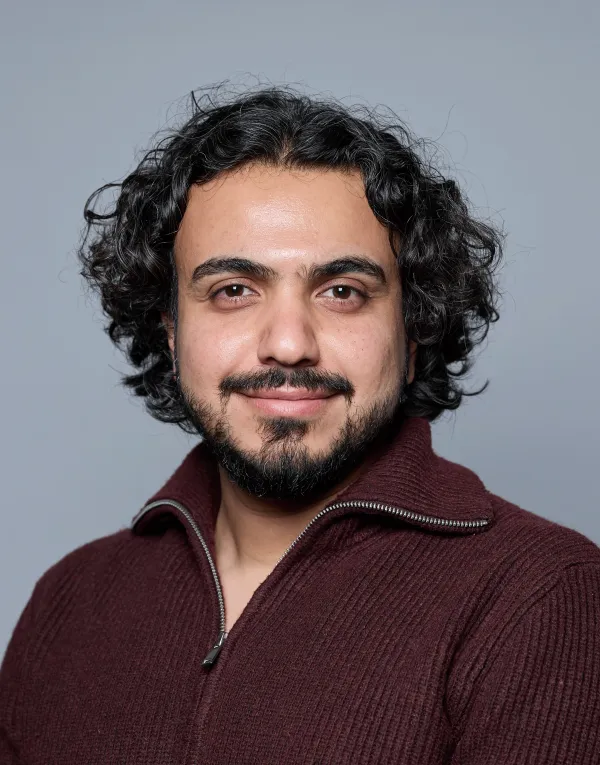
Moslem Ghomashlouyan (born 1993 in Iran) is a sociologist and social anthropologist with an interest in ethnographic fieldwork integrating economic and anthropological research in the Middle East. After receiving his PhD from the University of Bern (CH) in 2025, he began developing a new project centered on investigating economic workaround practices in the face of imperial weaponization of economics—specifically, sanctions. Sanctions attempt to block formal international trade with sanctioned populations and their access to centralized financial institutions, such as international banking and payment systems, as well as stock markets. Sanctions workarounds are employed by both state actors and cross-class segments of sanctioned societies, and include, among others, de-dollarization, cryptocurrency trade facilitated by decentralized finance (DeFi), and smuggling.
In his doctoral thesis, he wrote on smuggling, migration, and gender in Iran's Kurdish borderlands, which was awarded the 2025 prize for the best doctoral thesis by the University of Bern's Faculty of Humanities.
Cryptocurrency trading is usually associated with tech bros and libertarians in the Global North. In Iran, it looks different. Moslem Ghomashlouyan’s project traces how, under conditions of economic and financial exclusion, cryptocurrencies have become a tool of sustaining livelihoods and securing futures for cross-class segments of the population.
Since 2011, intensified US-led financial sanctions have repeatedly driven the country’s currency, the rial, to record lows against the US dollar, eroding its role as a store of value. Faced with this economic pressure, Iranians across social classes have turned to cryptocurrency trading, among other strategies, to save, move capital, and mitigate the effects of currency instability amid economic and financial exclusion and restricted access to hard currencies. For many young people, it has also become a form of “leapfrogging”—bypassing conventional paths to social mobility, such as higher education, steady employment, or even stock market speculation.
During his fellowship at the Collegium, Moslem will use digital ethnography among cryptocurrency traders in Iran and engage with the online platforms where such trading is discussed, to tell a different story: one of how cryptocurrencies have given many Iranians access to currencies other than the rial. This includes people from modest socioeconomic backgrounds and women, both largely excluded from the mainstream imaginary about who cryptocurrency traders are.
Cryptocurrency; trading; Iran; sanctions