
Netherlands Institute for Advanced Study in the Humanities and Social Sciences
Netherlands

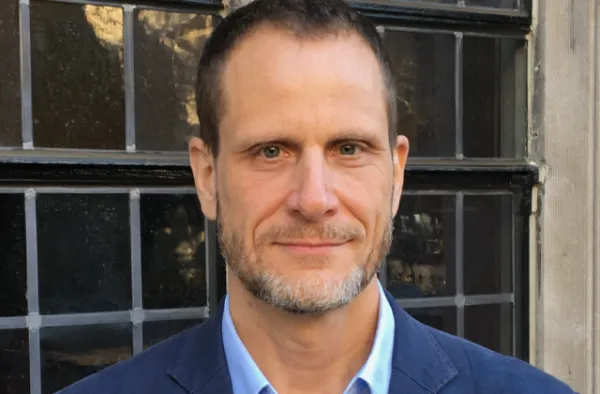
Philip S. Gorski (Ph.D. University of California, Berkeley 1996) is a comparative-historical sociologist with strong interests in theory and methods and in modern and early modern Europe. His empirical work focuses on topics such as state-formation, nationalism, revolution, economic development and secularization with particular attention to the interaction of religion and politics. Other current interests include the philosophy and methodology of the social sciences and the nature and role of rationality in social life. Among his recent publications are The Disciplinary Revolution: Calvinism and the Growth of State Power in Early Modern Europe (Chicago, 2003); Max Weber’s Economy and Society: A Critical Companion (Stanford, 2004); and “The Poverty of Deductivism: A Constructive Realist Model of Sociological Explanation,” Sociological Methodology, 2004.
Research question: Is the modern West as "disenchanted", "differentiated" and "rationalized" as Neo-Weberian theories of "secularization" claim?
When seen in world-historical perspective, and in comparison with most Asian societies, the cultural pluralism that characterizes the contemporary West is in fact quite normal. What stands out about Western history isn’t its so-called “secularity,” but rather its Medieval “unity.” This Medieval “unity” was marked by a highly independent religious field with clear boundaries, a strict hierarchy, and rigid orthodoxy. It’s only when we consider this background that contemporary culture can retrospectively appear “unique” or “peculiar.”
Philip Gorski wants to create a framework to better understand today’s situation and to outline a historical narrative that explains it. This framework uses field theory and three key distinctions: sacred/profane, transcendent/immanent, and monopoly/free market. The narrative argues that a series of unique historical events allowed the Roman church to claim a monopoly over legitimate sacred practices. This subsequently collapsed, leading to the fragmentation of the sacred.
Comparative and Historical Sociolog; Culture/Knowledge; Methods; Political Sociology and Social Movements; Religion; Theory