Institute for Advanced Studies in the Humanities
United Kingdom

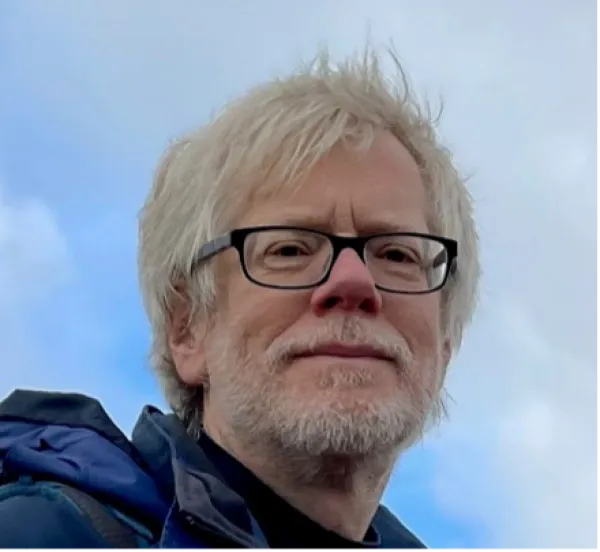
Dr John Harries is a senior lecturer in Social Anthropology at the University of Edinburgh. His research concerns the memory and materiality with particular reference to contemporary politics of identity in postcolonial settler societies. He has explored these issues through an ongoing ethnographic study of the ways in which the Beothuk are remembered in Newfoundland, Canada. In the context of this work, he has become interested in the exploration of the affective presence and emotive materiality of human remains, as well as other things, traces and substances (stones, paths, blood etc.) that are enrolled into the ways in which we materialise the presence of the past.
During my time as an IASH sabbatical fellow I will to write to a finish a draft of a short book which will be styled as “a speculative object biography” of an artifact presently in the collections of the British Museum.
The title of the project/proposed book is: Am,Ll.2 (a Beothuk harpoon head) – small things, story-making and the work of memory.
The proposed book is based on many years of research into the ways in which the people of Newfoundland, Canada, remember the Beothuk – a now considered-to-be-extinct people indigenous to the island.
The focus of this study will be a small artefact that presently resides in the collections of the British Museum and is identified by the museum number Am, Ll.2. It is thought to be part of harpoon head carved of bone or caribou antler. Presented as a biography of this artefact, the proposed book will be written as a non-linear gathering of stories and scenes through which small carved object will become articulate and invited to speak of other lives and the violence of histories of settler colonial possession which still haunts the island of Newfoundland.
The text therefore sits as the nexus of a number of concerns:
memory; postcolonialism, identity