
Collegium Helveticum
Switzerland

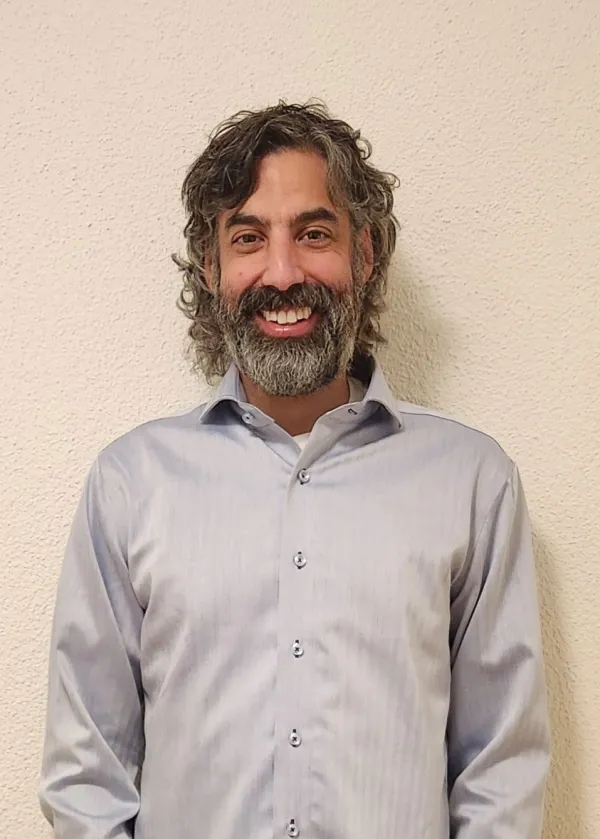
Christopher Hasson’s research aims to make physical rehabilitation better by understanding how the brain learns to move the body and how robots might speed up this process. While robotics has enormous potential to aid rehabilitation, many obstacles must be overcome to achieve good rehabilitation outcomes. For example, people naturally come to rely on help from a robot, which defeats the purpose of rehabilitation, which is to have people regain the capacity for independent living. Although the engineering of rehabilitation robotics has become quite advanced, we still do not fully understand the motor learning processes involved–this is the gap that Christopher’s research aims to fill–using a transdisciplinary approach that operates at the intersection of neuroscience, engineering, rehabilitation, and psychology.
Christopher is an associate professor of physical therapy, movement, and rehabilitation sciences at Northeastern University, US, where he directs the Neuromotor Systems Laboratory. He earned his bachelor of science at the University of Delaware, master of science at Ball State University, and doctorate in kinesiology at the University of Massachusetts Amherst.
For more than thirty years, scientists and investors have been working on robotic technology to help people recover from injuries that affect their movement. But in many cases, these machines haven’t proven to be much better than regular therapy in restoring a patient’s abilities. However, robots can make things easier for physical therapists by taking on some of the hard work, allowing therapists to provide more intense and frequent therapy sessions. Usually, therapists oversee the robots, picking and starting different robot movements or actions to help the patient. The physical interactions between the robot and the patient are managed by smart programs that can adapt and change as the patient improves. However, some worry that the repetitive movements of the robots might not help the brain re-learn and adapt as well as human-guided therapy does. Christopher’s project explores whether having therapists control the robots more directly during therapy sessions could be better for patients.
robotic technology; health