
Institut d'études avancées de Paris
France

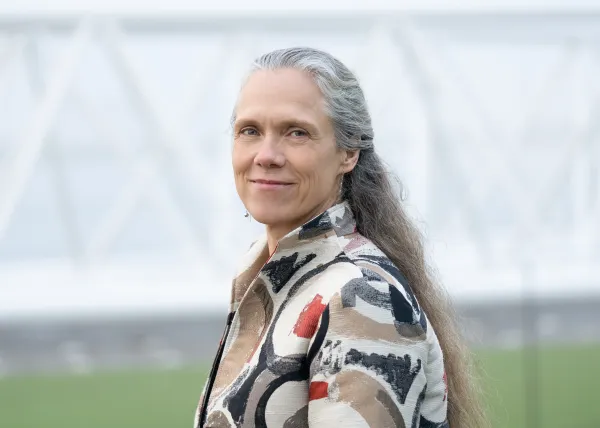
Carola Hein is Professor History of Architecture and Urban Planning at Delft University of Technology, Professor Water, Ports and Historic Cities at Leiden and Erasmus University. She holds the UNESCO Chair of Water, Ports and Historic Cities and leads the LDE PortCityFutures Center. Among other major grants, she received a Guggenheim fellowship, an Alexander von Humboldt fellowship and several Volkswagen Foundation grants.
She serves as President of the International Planning History Society (IPHS) and as editor for peer-reviewed open access journals including Blue Papers, CPCL, and Planning Perspectives. She has published widely in the field of architectural, urban and planning history and has tied historical analysis to contemporary development. Her recent (co-)edited books include: Hustle and Bustle of Port Cities (2025), Port City Atlas (2023), Oil Spaces (2021), Urbanisation of the Sea (2020), Adaptive Strategies for Water Heritage (2020), The Routledge Planning History Handbook (2018).
In September 2026, he joined the Paris IAS for a ten-month residency as part of the FIAS (French Institutes for Advanced Study) international mobility program – funded by the European Union’s Horizon Europe program under the Marie Skłodowska-Curie Actions (GA-101217263). She holds the City of Paris 2026-2027 Chair, supported by the City of Paris and the Paris IAS, aimed at promoting research on subjects of interest to the municipality.
The Seine River basin exemplifies the disconnect between water systems, governance, planning tools and processes that is prominent worldwide. From source to sea the river is managed to regulate water levels, facilitate shipping, and prevent drought and flooding, with limited integration across these efforts. Following a brief literature review and historical overview of the role of water in planning that affects the Seine watershed, the research focuses on tools and practices that have shaped territorial scale transitions.
It examines three themes that have guided spatial development around water infrastructure on and for the Seine, focusing on the period after World War II. First, it examines planning for and with the Seine watershed through large-scale plans and top-town national projects, which resulted in the urban highways that cross central Paris, plans for large-scale infrastructures to connect Paris to the sea, and regional plans for new towns and regional rail networks. Second, it explores the role of urban design and planning competitions, with their plethora of architectural proposals, including plans to make Paris a seaport. Third, it explores recent participatory developments employed in the context of collaboration at a regional scale, such as the Entente Axe Seine, characterized by consultations and co-design. The research concludes by developing a foundation for the much-needed transition to integrated territorial planning at the scale of the Seine River.
The Seine; Water; Ports, Urban history.