
Helsinki Collegium for Advanced Studies
Finland

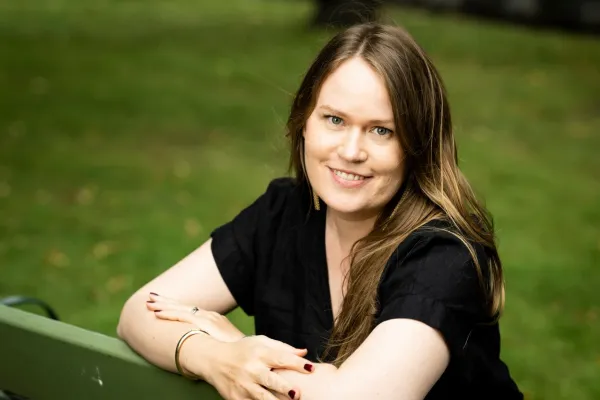
Elina Helosvuori is a sociologist and science and technology studies scholar. Her earlier work includes multi-sited ethnography about assisted reproduction in Finland, in which she explored the entanglement of clinical practices, laboratory labour, and patient experience in fertility treatment practices. Helosvuori received her PhD in sociology from the University of Helsinki in 2021. As a postdoctoral researcher at Tampere University, she has used ethnographic methods to explore intersections of medical practices and experiences of chronic pain, focusing on surgical interventions to endometriosis. Her current research is situated at the intersections of feminist science and technology studies, medical sociology and environmental humanities.
Elina Helosvuori’s project focuses on environmental crisis and human reproduction that are both pressing issues in public, political and academic debates. She examines the interrelationships between the embodied and ecological environments that condition reproduction and how liveable futures are imagined. The project studies procreation from the perspective of ‘being scarred’. Helosvuori focuses on bodies and ecosystems as reproductive environments that are wounded in ways that hinder fertility and reproductive desires. In other words, she focuses on embodied and ecological conditions that may not enable the continuity of life in the form of new births. The project juxtaposes two cases of activism. First, Helosvuori explores patient activism that emerges from the experience of living with endometriosis, a chronic disease in which cells similar to the uterine lining grow outside the uterus causing persistent pain (subproject 1). Second, she draws on an analysis of younger people’s climate anxiety and activism and explore the effects of damaged ecological surroundings on the decision not to have children (subproject 2). Through its juxtaposition of patient and climate activism, her study’s objective is to analyse struggles to improve the conditions of life in scarred environments – with or without babies.
Chronic disease, biomedical practices, fertility, climate anxiety, activism