
Netherlands Institute for Advanced Study in the Humanities and Social Sciences
Netherlands

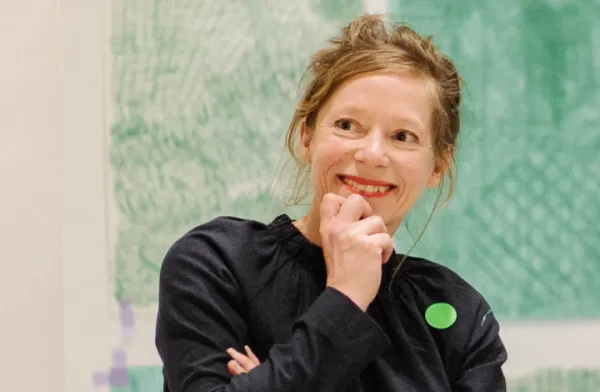
Cecilia is an Artist-in-Residence Fellow at NIAS during 2025-2026.
"For each project I depart from content, surrounding and my own fascination – and I always aim to reflect these elements in unexpected yet precise three-dimensional appearances.
Projects of a more political nature you will find at the new(!) site of Pink Pony Express – the research collective I co-founded in 2010 that continues to hold a special place in my practice."
Research question: How can the surtout de table serve as a medium to explore and question the structural foundations, aesthetics, and origin stories of contemporary institutions within their architectural contexts?
Cecilia Hendrikx’s research explores the relationship between architecture and the institutions it houses. Through the creation of a series of surtout de tables, she examines how architectural design both reflects and shapes the social, historical, and organisational dynamics within an institution.
By engaging with the community of fellows, staff, and facilitators, she seeks to uncover how the built environment influences institutional roles within the broader, evolving context of societal expectations. Her focus centres on the spaces we inhabit and their immediate surroundings, where appearances often veil more complex, underlying meanings.
Hendrikx aims to uncover how the moral values of the era in which these spaces were constructed are reflected visually, exploring the principles that shaped those environments at the time. She also investigates how shifting zeitgeists can alter or enhance our contemporary perceptions of these environments. The vantage point of this research is the architectural setting of the KNAW–NIAS community.
Her methodology integrates practical, theoretical, and phenomenological research, with each component continuously informing and shaping the other throughout the research process.
Architecture and institutional identity; surtout de table as research medium; built environment and social dynamics; visual manifestations of moral values; phenomenology of institutional spaces