Madrid Institute for Advanced Study
Spain

She is a Tomás y Valiente fellow at MIAS.
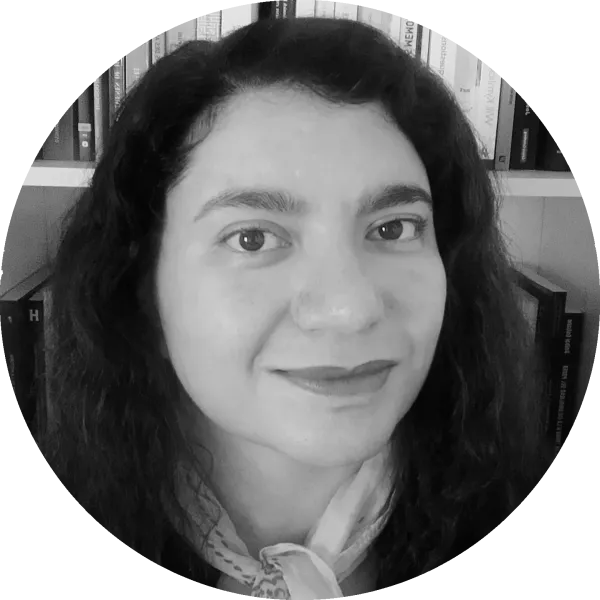
Miriam Hernández Reyna is a philosopher and historian. She holds a PhD in Contemporary History from Université Paris 1 Panthéon-Sorbonne, France. She specializes in the history of memory, theory of history, and conceptual history. Her work addresses the reinterpretations of the colonial past as a matter of historical memory within the context of the Iberoamerican worlds. After working on the construction of a new memory of the colonial past in the recent history of Mexico, her research has addressed the diplomatic controversies between Spain and Mexico concerning the memory of the conquest and colonization. She has taught at prestigious universities such as Sorbonne- Université, Université Paris Cité, Université Paris Nanterre, and the National Autonomous University of Mexico (UNAM). She has been a postdoctoral researcher at the Institute of Philosophical Research at UNAM, Mexico (2022–2024) and at the École des hautes études hispaniques et ibériques of the Casa de Velázquez (2024–2026). She is also a member of the research project HISTEMAL “History of the Present Time, Memory and Emotions in Latin America, Spain and Portugal” (IHTP, CNRS/Casa de Velázquez) and of IBERCONCEPTOS (Ibero-American Network of Conceptual History).
This project is based on a main hypothesis: in present-day Spain, a “decolonial memorial regime” is taking shape. Understood as an emerging public representation of the past, this regime manifests in processes such as the revision of museum collections, diplomatic controversies regarding historical apologies, historiographical debates, and public discussion concerning the colonial heritage. In this way, the research addresses the formation of “decolonial memories” in the public sphere. These narratives propose not only a rereading of the colonial past, but also a rearticulation of the horizon of the future. In particular, the project examines how these discourses draw upon theoretical currents in Latin American thought and analyzes the transatlantic channels through which these ideas circulate in urban centers such as Madrid, Barcelona, and Bilbao. From an interdisciplinary perspective, the research draws on the history of memory to trace the evolution of these narratives, and on historical epistemology to theorize the transformations they introduce in the articulation between past, present, and future.
Decolonial Memory; Memory Studies; Latin American Thought