Collegium Helveticum
Switzerland

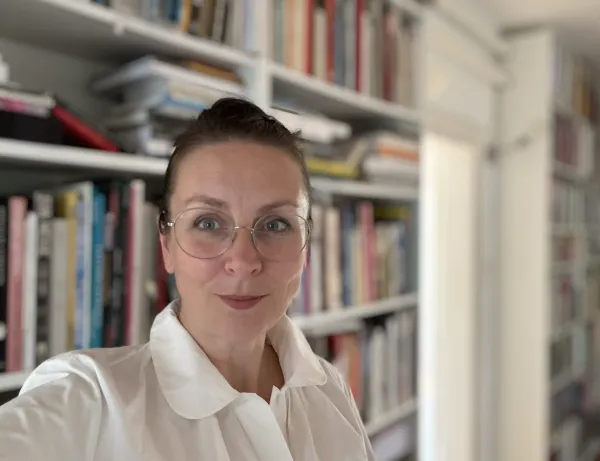
Hanna Barbara Hölling is a scholar specializing in art history and theory, material and heritage studies, conservation, and American and European art since the 1960s. Holding a PhD in Art History and Cultural Studies from the University of Amsterdam (NL), she has taught the history of art, technology, and conservation at the Department of History of Art at UCL, London (UK), as well as cultures of conservation at the Bard Graduate Center in New York (US). This academic work is complemented by extensive experience in the museum and heritage sector, including leadership roles.
Her research is anchored in two interconnected strands. The first focuses on the art and culture of the 1960s and 1970s, with particular attention to visual arts and performative practices in their material and cultural contexts. The second investigates conservation as a critical and epistemic practice, examining how it shapes the identities of both objects and communities. Central to her work is an exploration of the politics of materiality and how interaction with matter can produce knowledge that extends beyond traditional visual traditions. More recently, her research has engaged with the concepts of naturecultures and care ethics as frameworks for addressing contemporary ecological and cultural challenges.
Caring for Naturecultures reconceptualizes the conservation of art and culture as a practice of care, and places it in dialogue with the preservation of natural environments. Centering on “conservation objects” as natureculture hybrids, the project frames care as an expanded and ethical engagement with more-than-human worlds. The term natureculture signals the mutual co-constitution and entanglement of nature and culture, challenging the Western dichotomy that separates human activity (culture) from the natural world.
Engaging with feminist philosophies and care ethics—which define care as “everything we do to maintain, continue, and repair our world so that we may live in it as well as possible”—Hanna Barbara Hölling interrogates the hierarchies, dependencies, and exclusions embedded in conventional understandings of care and conservation. In doing so, her project further unsettles long-standing binaries underpinning conservation discourse: nature/culture, subject/object, practice/theory, and tradition/innovation.
Caring for Naturecultures poses fundamental questions: What is the “thing” we preserve—how, why, and for whom? And what visions of futurity guide conservation and care for naturecultures in the face of impending environmental breakdown?
Drawing inspiration from Bernard Stiegler’s call to “think care-fully,” the project positions care as essential to sustaining life and cultivating coexistence with other beings. Crucially, it reimagines conservation as a critical, care-driven practice.
conservation theory; care ethics; feminist philosophy; natureculture; more-than-human studies; environmental humanities; cultural heritage; art conservation; nature-culture entanglement; posthumanism; multispecies studies; environmental ethics; sustainability; futurity; Bernard Stiegler; binary deconstruction; conservation discourse; material culture; ecological thinking; interdisciplinary humanities.