Israel Institute for Advanced Studies
Israel

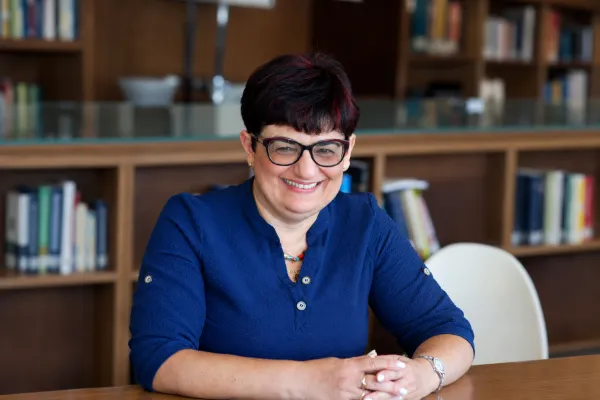
Livnat Holtzman is an Associate Professor in the Department of Arabic at Bar-Ilan University, specializing in Islamic intellectual history, Hanbali theology, and hadith. Before entering academia, she worked for fourteen years as an Arabic translator and language analyst, an experience that shaped her close attention to language, religious discourse, and the subtleties of communication. Her academic leadership roles have included serving as Chair of the Department of Arabic at Bar-Ilan University (2012–2018). Her book Anthropomorphism in Islam: The Challenge of Traditionalism (700–1350) (Edinburgh University Press, 2018; Arabic translation, 2023) opened a new line of inquiry into gestures and embodied practices in Islamic theology. She is currently writing a biography of Ibn Qayyim al-Jawziyya (1292–1350), a Damascene theologian and jurist and a prominent disciple of Ibn Taymiyya (1263–1328), for Oneworld’s Makers of the Muslim World series, while pursuing research aimed at establishing nonverbal communication as a field of historical inquiry in Arabic and Islamic studies.
Livnat Holtzman’s research examines how Arabic texts preserve gestures, facial expressions, laughter, and other forms of nonverbal communication, with particular attention to hadith transmission and theological debate. Building on her work on anthropomorphism, she investigates how bodily performance conveyed religious meaning and how its textual traces can be used as historical evidence.
At IIAS, she pursued these questions as an initiator and co-organizer of the research group “Nonverbal Communication and Performance in Medieval and Early Modern Islamic Societies” (2025–2026). The group brought together specialists across Arabic and Islamic studies to explore how nonverbal communication shaped religious authority, social interaction, and cultural meaning, and to develop comparative approaches to reading performance through written sources.
Holtzman is co-organizing the international conference “Nonverbal Communication in Medieval Islamic Culture” at IIAS in Jerusalem (17–20 May 2027) and co-editing, with Camilla Adang and Sarah Stroumsa, Nonverbal Communication in Islam and Beyond: Historical Perspectives on Text, Embodiment, and Performance, approved in principle for Brill’s Handbook of Oriental Studies.
Muslim Theology; Hadith Literature