Netherlands Institute for Advanced Study in the Humanities and Social Sciences
Netherlands

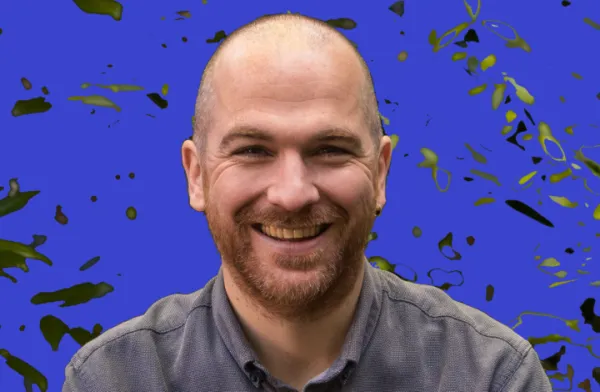
Ruud is a NIAS Lorentz Theme Group Fellow (Hybrid Agencies: Interacting with Biological and Artificial Systems) during 2025-2026.
Hello! I’m an associate professor in the department of Social, Health & Organisational Psychology at Utrecht University. Currently, I lead the human+ team, a young team consisting of early carreer researchers investigating social cognition and social dynamics in the age of AI. Our research is generously funded by the ERC, NWO, and Utrecht University. From 2020 to 2024, I was an assistant professor in the same department. From 2017 to 2020 I was a postdoc in the Social Brain in Action Laboratory within the Institute of Neuroscience and Psychology, University of Glasgow, Scotland. In bonny Scotland I was advised by Professor Emily Cross and part of the Social Robots project in which we studied how humans perceive and interact with robots (go #teamSoBots!). Prior to that I was a postdoc in the Brain and Emotion Laboratory, Maastricht University, The Netherlands and the Department of Psychiatry and Mental Health at the University of Cape Town, South Africa (2015-2016). Between 2011 and 2015, I completed my PhD under the supervision of Professor Beatrice de Gelder at Tilburg University. In 2016, I successfully defended my dissertation entitled “Sympathy for the Devil - On the Neural Mechanisms of Threat and Distress Reactivity”.
Research question: How can the social dynamics of families be described when interfacing with AI? Can this new description map AI-mediated changes in families’ social dynamics at both the behavioural and brain level?
Pets have long been a part of family life, living in homes and shaping social dynamics. Now, AI agents are beginning to do the same, gradually integrating into everyday family environments. But how should these new agents be defined? Are they mere objects or tools, or do they take on roles similar to siblings, pets, or even full-fledged family members? And do they bring families closer together or push them apart?
Despite the fundamental role families play in human life, research in psychology, social neuroscience, and human-AI interaction has largely focused on individuals. This project seeks to develop a new framework for understanding family dynamics in the age of AI, mapping AI-driven changes at both behavioral and neural levels.
The project aligns with all three Axes of the Theme Group Hybrid Agencies: Interacting with Biological and Artificial Systems. It explores the concept of an ‘agent’ within a family, distinguishing between biological and artificial family members (Axis 1), examines how AI integration evolves over time (Axis 2), and investigates family hierarchies, co-agency, and the boundaries of artificial agents within family systems (Axis 3). Beyond providing a formal description of AI-mediated family dynamics, this work can help inform the design of family-centered artificial agents.
AI and family dynamics; social neuroscience of families; human-AI interaction; artificial agents as family members; co-agency and hybrid systems