
Freiburg Institute for Advanced Studies
Germany

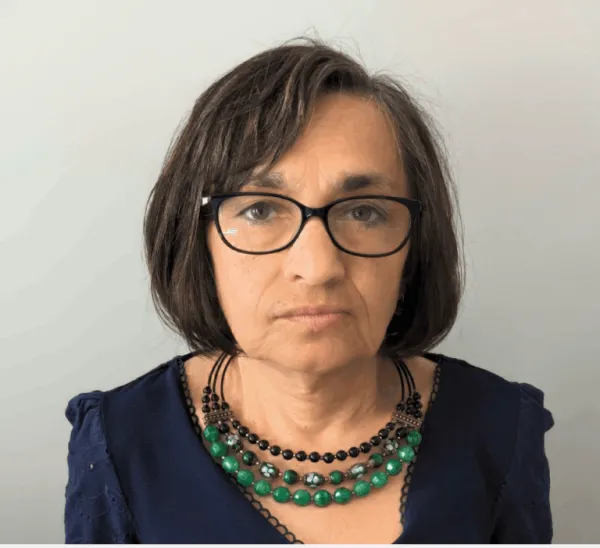
Tetiana Hoshko is a professor in the History Department of the Ukrainian Catholic University (UCU) in Lviv. Previously, she served as a docent at UCU’s Departments of History of Ukraine, World History, and Classical, Byzantine, and Medieval Studies (2004–2020). Before joining UCU, she worked as an assistant and later as a docent at the History Department of Ivan Franko National University of Lviv (1995–2004), a researcher at the M. S. Hrushevsky Institute of Ukrainian Archeography and Source Studies (1992–2006), and a researcher at the Ivan Krypiakevych Institute of Ukrainian Studies, National Academy of Sciences of Ukraine (1990–1992).
Her research primarily focuses on the history of early modern towns within the Polish-Lithuanian Commonwealth. She earned her Doctor of Historical Sciences degree from Taras Shevchenko National University of Kyiv in 2019.
Tetiana Hoshko has received numerous fellowships, including from the Institute for Human Sciences in Vienna, Imre Kertész Kolleg Jena, University of Münster, German Historical Institute in Warsaw, the Canadian Institute of Ukrainian Studies at the University of Alberta, and the Ukrainian Research Institute at Harvard University. She also served as a consultant for the research project “The Jagiellonians: Dynasty, Memory, Identity” at Oxford University (2015).
Her recent work explores attitudes towards women’s health and pregnancy in early modern urban contexts.
This project investigates the changing perceptions and practices surrounding women’s health and pregnancy in the urban centers of the Polish-Lithuanian Commonwealth during the 16th and 17th centuries. This era, marked by significant shifts in medical, legal, and social attitudes, witnessed the coexistence of Renaissance humanism and classical medical theories alongside local traditions. By analyzing a range of sources – medical treatises, legal records, dietary guides, etc. – the study seeks to illuminate how women’s reproductive health was understood, regulated, and treated in urban communities, thereby addressing a largely overlooked aspect of early modern Eastern European women’s history.
This project makes two key contributions. First, it expands the field of gender and medical historiography by documenting the impact of Renaissance medical ideas on women’s health in the region, highlighting the integration of Western and local perspectives in the Commonwealth’s urban areas. Second, it provides insights into the legal frameworks governing women’s reproductive rights and health, particularly through the town laws (Magdeburg and Kulm) that structured burgher society.
German town law in east-central europe; historical anthropology of early modern towns and town law; history and historiography of ruthenian lands within the polish-lithuanian commonwealth; ukrainian academic emigration after world war II