Centre for Advanced Study Sofia
Bulgaria

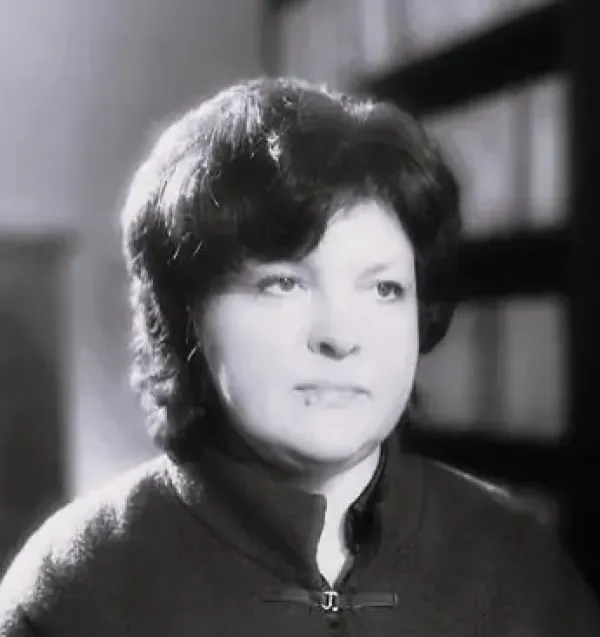
Yevgeniya Ignatenko is a Ukrainian musician, musicologist, and researcher of musical manuscripts. She received her PhD in Musical Arts in 2006 and has taught at the National Music Academy of Ukraine since 2002, where she is an Associate Professor. Her research focuses on early Ukrainian music, Byzantine chant, and Ukrainian-Polish cultural relations. She is the author of more than sixty scholarly publications and co-editor of Partesny Concertos of the Seventeenth and Eighteenth Centuries from the Kyiv Collection (2006). She has lectured at Aristotle University of Thessaloniki, the Feliks Nowowiejski Academy of Music in Bydgoszcz, and the National University of Music in Bucharest, and has presented her research at conferences and festivals across Europe.
Ignatenko is the founder of the Byzantinoslavica Study Group (Kyiv, 2023), dedicated to the study and performance of Ukraine’s Christian musical heritage. The project has received support from the Per Forma and House of Europe grant programs. She is a member of the International Musicological Society Study Group Music of the Christian East and Orient and of the Chrysorrhemon Study Group for Byzantine Musical Palaeography at Aristotle University of Thessaloniki.
She has been awarded scholarships by the Alexander S. Onassis Public Benefit Foundation (Greece) and the Juliusz Mieroszewski Centre for Dialogue (Poland), and was a resident of the Helsinki International Artist Program (Finland). Professor Ignatenko has also served as scientific advisor, lecturer, and music consultant for artistic projects and theatrical productions that bring scholarly research on Ukrainian musical heritage to contemporary audiences.
Ukrainian early music remains insufficiently recognized due to imperial and Soviet narratives that subsumed it within Russian history. Russia’s ongoing war against Ukraine, which began in 2014, has intensified the need for an independent narrative of Ukrainian musical history—one that reclaims the heritage of Kyivan Rus’ and demonstrates its connections to Byzantium and the Balkans, thereby challenging imperial claims.
In the sixteenth and seventeenth centuries, Ukrainian church chant was significantly renewed through interaction with Balkan Orthodox traditions. This is evidenced by “Bulgarian,” “Greek,” “Serbian,” “Muntanian,” and “Wallachian” chants recorded in Ukrainian manuscripts. However, their origins, adaptation, and reception remain insufficiently studied.
The main aim of this project is to determine the origins of the Balkan chants and to interpret them within the broader Slavic, Greek-Byzantine, and Balkan chant traditions. The study employs a comparative analysis of Greek-Byzantine, Moldavian-Wallachian, Serbian, Bulgarian, and Ukrainian-Belarusian manuscripts.
The project will reveal the relationships among these traditions and highlight the heuristic potential of comparative research. Newly identified chants will enrich the Byzantinoslavica Study Group repertoire and will be presented in Kyiv and at international venues, ensuring wide dissemination.
Music; Ukraine; Religion; Balkans; History