
Freiburg Institute for Advanced Studies
Germany

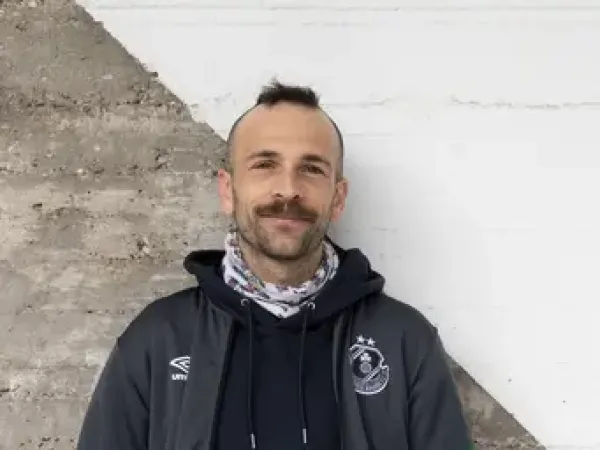
As an ethnomusicologist of sound, affect and social movements, Jack researches crowds as dynamic social and political actors in public space and their fraught relationship with liberal democratic governments. While a Postdoctoral Fellow at the Max Planck Institute for Human Development in Berlin (2021-24), his first book, Insurgent Fandom: An Ethnography of Crowds and Unruly Sounds was published with Oxford University Press. In this multi-sited ethnography, Jack reconsiders hardcore soccer fans called “ultras” as political actors in hopes of exploring the entangled possibilities, constraints, and contradictions of emancipatory social movements at large. His ongoing research on antifascism, anarchist-autonomist movements, and climate activism in Germany explores growing political disillusion toward global capitalism, liberal democracy, and state violence. His work across these topics has been published across a range of flagship journals in ethnomusicology, performance studies and cultural anthropology, including Ethnomusicology, TDR: The Drama Review, and American Ethnologist.
Developing into an epicenter for activism in Germany, an array of movements have galvanized in Berlin which have positioned themselves in opposition to the state and EU’s role in perpetuating an accelerating climate crisis. The very attitude that “soon it will be too late to save the planet and maybe the time has already passed” (Hardt 2012) is long gone in the eyes of climate activists, who have begun adopting increasingly radical strategies of protest and direct action. As street blockades become a favored tactic of civil disobedience, a sense of apocalypse permeates amongst participants—that which radiates past fears of impending natural disaster into anxieties around the resultant geo-political conflicts spurred by climate change and forced migration, extending into commentary over the ways in which actionable governmental solutions are delimited by economic constraints and the logics of financial markets (Abélès 2010). Spurred by fears of apocalyptic futures and a disillusion with liberal democracy, activists employ an array of tactics in hopes of grabbing the attention of politicians, news-media, and the German government. If the efficacy of such tactics is unclear, I explore my interlocutors’ moral commitment to taking action “when apparently nothing can be done” but “doing nothing is not an option” (Taylor 2022).
Counterculture; anti-capitalist movements; sound studies; voice studies; affect theory