
Netherlands Institute for Advanced Study in the Humanities and Social Sciences
Netherlands

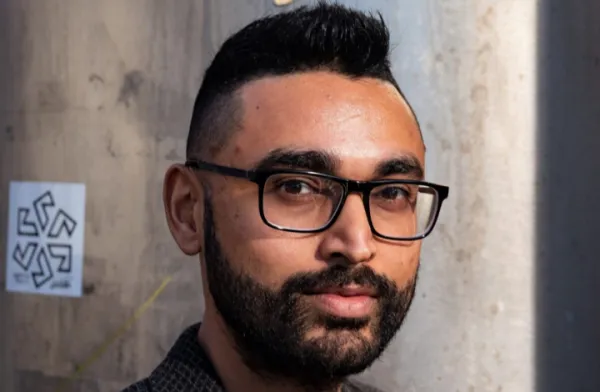
Shivant is a NIAS Theme Group Fellow (Ecology and Belonging: In Search of a New Political Space) during 2025-2026.
Shivant Jhagroe is an Assistant Professor at the Institute of Public Administration. His current research focusses on marginalised and more-than-human actors in policy and politics (e.g. racialised/low-income groups, ecosystems, algorithms).
Research question: How can we understand 'eco-belonging' in Global North territories from a decolonial perspective, zooming in on embodied experiences, cultural narratives and political agency?
Deep ecology, posthumanism, and new materialism have long been seen as key to the changes needed for social and environmental justice. These ideas emphasise our connection to land and water, recognising that non-human life—such as animals, plants, and ecosystems—has its own value and ability to act in the world. However, they often overlook the privilege involved in being able to engage with the more-than-human world.
Jhagroe sets out to decolonise the posthuman at three levels. First, he looks at how dispossession and having access to land shapes our sense of responsibility towards nature (Federici 2004). Second, he critiques the importance of the idea of ‘pure and untouched nature’ in deep ecological thinking, and how this concept has often emerged alongside processes that have dispossessed people of their land (Ferdinand 2022). Deep ecological thinking promotes the idea that nature has intrinsic value, independent of its usefulness to humans, and advocates for a fundamental shift in how we relate to the environment. However, this ideal of nature is often tied to projects where people get deprived of access to land. Third, he considers the impact of colonial dispossession, which has led to many displaced people arriving in Global North countries, only to face further exclusion from wealth and land ownership (Jhagroe 2024).
This project examines ‘eco-belonging’ in Global North regions through a decolonial lens, focusing on lived experiences, cultural narratives, and political agency.
big data; cities; citizenship; climate justice; critical theory; environmental policy; materiality; public affairs; public policy; Decolonizing posthumanism; eco-belonging and dispossession; privilege in environmental thought; deep ecology critique; land access and ecological responsibility