
Freiburg Institute for Advanced Studies
Germany

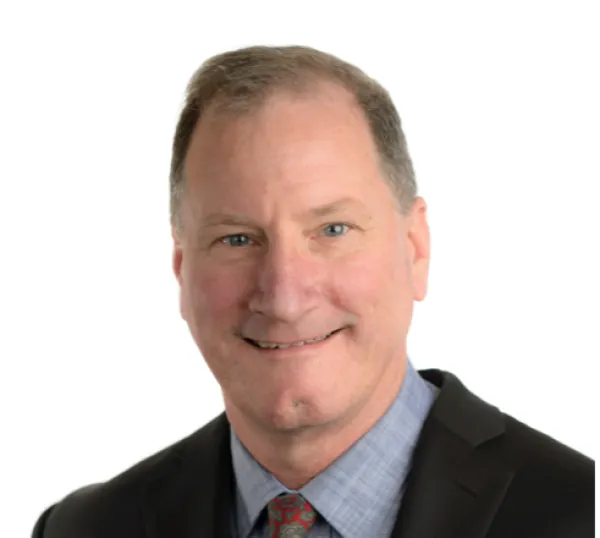
Professor Gregg Suaning has more than a quarter century of expertise in biomedical engineering with a career that combines industrial and academic experience. His primary focus is sensory bionics – that is, the restoration of senses through electrical neuromodulation. He began his career in this field in 1992 with Cochlear Limited and was an instrumental contributor in seeing this life-changing device become a mainstream therapy for overcoming deafness. He continues to contribute to the next generation of these devices through collaborative projects with industry. Suaning’s PhD was awarded in 2002 and included pioneering work in the field of visual neuroprostheses for the profoundly blind. While at the University of New South Wales, as a Professor of Biomedical Engineering, Suaning was Program Leader in a AU$50M ARC Special Research Initiative from 2010-2015 and continues this work towards finding therapies to overcome blindness. He was awarded the Bartimaeus Award by the Detroit Institute of Ophthalmology for his service to the blind community and his contribution towards establishing a culture of collegiality in the field of prosthetic vision. In 2019, he established the School of Biomedical Engineering at the University of Sydney where he currently holds the position of Inaugural Head of School.
Success in artificial intelligence is measured by the Turing Test. In this test, if a human interrogator is unable to determine whether or not responses are coming from a machine or another human, the machine is said to be ‘thinking’. A parallel metric can be applied to treatments of neurological disorders – that is, if a human interrogator is unable to determine whether a person is healthy, or has been healed through an applied therapy, the therapy is said to be a ‘cure’.
Applying this unequivocally high standard, new ways of thinking are born. We no longer need to think of rehabilitation from a spinal cord injury (SCI) as meaning compensatory measures such as sit-to-stand functional electrical stimulation enabling one to more readily enter and exit a wheelchair. Instead, we challenge ourselves to deliver a new means of overcoming SCI paralysis by replacing lost neural functions with the same capabilities as the original system or indeed better. Neural Rehabilitation is thereby bridged with micro- and nanotechnologies, genetic engineering to true neurotechnologies. In this FRIAS study, we seek to cure SCI by restoring the communication flow along the entire length of the spinal cord.
Neuroprosthesis research; Sensory bionics; Cochlear implants; Biomedical engineering