
Institute for Advanced Study at Central European University
Hungary

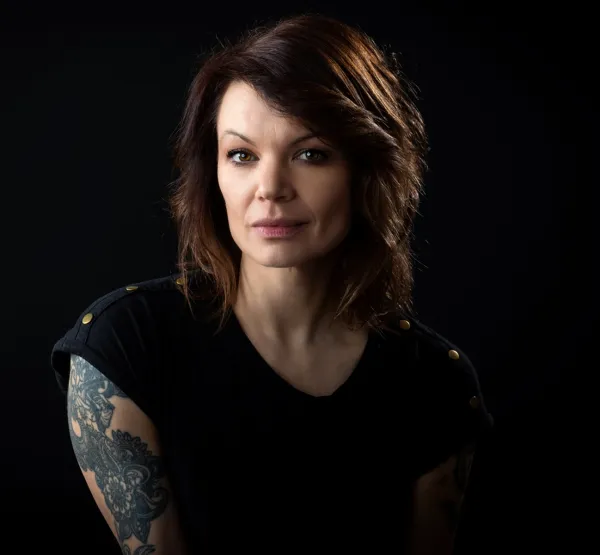
Jasna Jovićević is a distinguished figure in the Serbian jazz scene, renowned for her versatility as a musician, composer, and artistic researcher. She is a master of multiple instruments, including the saxophone, bass clarinet, flute, and spacedrum. Her academic journey began with a BA in Jazz Saxophone Performance and Teaching from the Franz Liszt Music Academy in Budapest. She furthered her studies with an MA in Music Composition from York University in Toronto and culminated in a Ph.D. in Contemporary Arts and Media from Singidunum University in Belgrade, specializing in transdisciplinary studies.
As a performer, Jovićević has graced stages across Europe, the USA, and Canada, presenting her original compositions at numerous national and international festivals. At the moment, she leads several musical projects, including the Jasna Jovićević Quinary, ANJALI Trio, and the Jovicevic/Miklos/Wojcinski Trio. Her discography of original music includes “Invented Reality,” “The Sound of Birds,” “Travellers,” “Flow Vertical,” “Informal Shapes,” “Cardinal Points,” “Sounding Solitude,” “Soundfileds,” and “Live in Belgrade Radio.,” and she play on a dozen other albums as a sidewoman.
This project investigates how the legacies of Hungarian avant-garde jazz, forged under Cold War censorship and cultural negotiation in the 1960s, continue to shape the hyper-identities and practices of contemporary musicians in Hungary and Serbia. The avant-garde idiom, developed by figures such as György Szabados in conditions of political surveillance and artistic constraint, was more than resistance: it articulated authenticity through experimentation and fusion with local traditions. Today, these legacies remain embedded in the identities of musicians who navigate between global jazz circuits, national histories, and socio-political realities. In Serbia, the absence of a strong avant-garde lineage has generated different strategies of adaptation and negotiation, reflecting semiperipheral cultural positioning. Methodologically, the project adopts a transdisciplinary approach that combines archival research, social anthropology, ethnography, and artistic practice. In doing so, it advances decolonizing methodologies in the humanities by dissolving rigid disciplinary boundaries and affirming artistic research as a site of both knowledge production and social critique.
jazz; Cold War;