
Helsinki Collegium for Advanced Studies
Finland

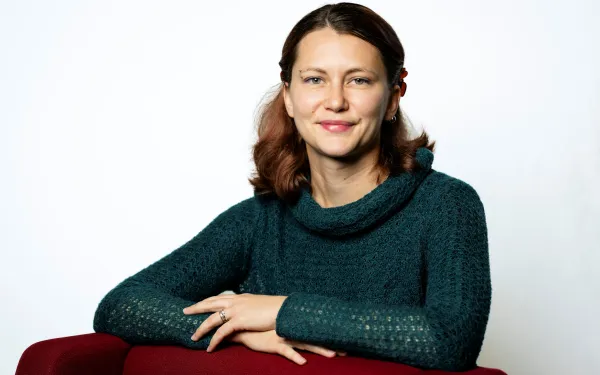
Karin Kallas-Põder received her doctorate in theology from the University of Helsinki in 2025. Her research focuses on the intersection of religious belief, experience, and emotion, particularly in 19th-century Hasidism and Christian Reformation. In 2022–2023, she was a visiting researcher at the Hebrew University of Jerusalem. She is currently an associate research fellow in the University of Tartu project ‘The Sign “God” in Post-Secular Estonia – A Critical-Hermeneutical and Constructive Contribution to Conviviality of the Religious and the Secular in Liberal Democracy’. She will conduct her postdoctoral research at the University of Helsinki’s Centre of Excellence ‘Meliorist Philosophy of Suffering’.
Debates over free choice are abundant in the history of Western thought; the question has attracted both original thinkers and scholars studying them. Researchers tend to evaluate the persuasiveness of deterministic arguments according to their coherence. This approach, while necessary in itself, misses a crucial point about deterministic worldviews: their place in life. Kallas-Põder's project brings two novel aspects to the research on free choice skepticism. First, she studies how deterministic belief functions in human life, e.g., how it affects human attitudes towards the world (empathy, non-judgmentalism, resignation), how various human experiences are interpreted in a deterministic way, and how this belief affects a believer’s emotional life (anger, gratitude, equanimity). Secondly, she uses less-known Jewish texts as source material. Her main source is a Torah commentary called Mei ha-Shiloah by a 19th-century Polish Hasidic rabbi, Mordekhai Yosef Leiner. Even though Leiner is considered to be the most radical determinist in the whole Jewish tradition, his work remains mostly unknown outside scholarship on Hasidism. With the introduction of Leiner’s thought to the study of free choice and determinism, Kallas-Põder's aim is to give space to the voices and ideas of more isolated and marginal figures.
Free choice ; determinism; Hasidic thought; Comparative religion; Study of emotions and experience