
Netherlands Institute for Advanced Study in the Humanities and Social Sciences
Netherlands

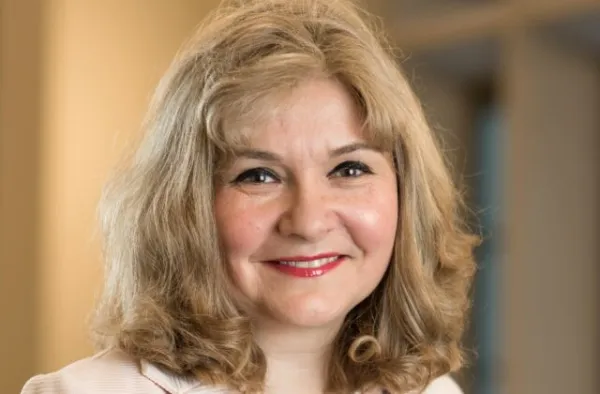
Prof. Dr. Maria Koinova is Professor of International Relations in the Department of Politics and International Studies at the University of Warwick. She serves as Deputy Editor of the Migration Studies Journal (Oxford University Press), and is an elected member of the Executive Council of the Migration and Citizenship section of the American Political Science Association (APSA). Since 2023, she has been Principal Investigator of a series of impact-oriented projects developing a programme "Engaging the Global Ukrainian Community for Ukraine's Recovery: Democracy and Human Rights Dimensions," conducted in collaboration with OSCE-ODIHR and ICMPD and other organisations, and supported by the Faculty of Social Sciences, Research England’s Policy Support Fund, and the ESRC Impact Acceleration Account. Her most recent project (2025–2026) explores how socially responsible diaspora entrepreneurship across six European countries engages with local and regional governance in Ukraine.
Prof. Koinova participated in the governing board of the EU Jean Monnet network "Between the EU and Russia" (2018-2022) and was the Principal investigator of a research project on "Polycentric Governance of Transit and Irregular Migration" (2019-2020) sponsored by the Centre for Global Cooperation Research in Germany. She successfully completed as Principal Investigator a large-scale European Research Council Starting Grant Project “Diasporas and Contested Sovereignty” (2012-2017).
Koinova held academic positions at Harvard’s Belfer Center for Science and International Affairs (2001-2004), Davis Center for Russian and Eurasian Studies (2004-2005), and Center for European Studies (2011), Cornell’s Government Department (2007-2008), Dartmouth’s Dickey Center for International Understanding (2008-2009), the Woodrow Wilson International Center for Scholars in Washington D.C. (summers 2006, 2007), European University Institute (1999-2005, Ph.D.), Uppsala University (2013), Netherlands Institute for Advanced Studies (2012), Kroc Center for International Peace Studies at the University of Notre Dame in the USA (2018), and tenure-track faculty positions at the University of Amsterdam (2009-2012) and American University of Beirut (2005-2006).
The way time structures everyday activities and long-term strategies of migrants affects their political engagement, from reiterating old traumas to getting quickly involved with their homelands when violence occurs. The interest in studying time and temporalities in migration studies has grown with the advent of mobility studies. Existing studies mostly follow the implications of time on migrants’ everyday lives, not their political activism.
Maria Koinova takes this discussion further and examines how diasporas interpret time and how it affects their identities and political practices in different global locations. Her heuristic framework features different temporalities of diaspora engagement, drawing on findings from an ERC grant “Diasporas and Contested Sovereignty” and further research. The study uses a multi-methods approach, combining individual interviews with results from a cross-national survey in Europe, and seeks to integrate views of both political entrepreneurs and ordinary citizens. This work will culminate in a book, currently under contract for publication with Oxford University Press.
Time and migration; diaspora political activism; transnational engagement; temporalities of identity; ethno-national and intra-state conflict; contested sovereignty; international politics of migration