
Netherlands Institute for Advanced Study in the Humanities and Social Sciences
Netherlands

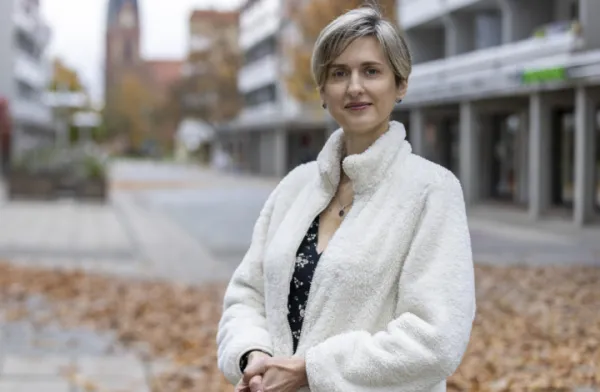
Yuliya is a Safe Haven Fellow at NIAS during 2025-2026.
Yuliya Krylova-Grek is an academic and researcher in Social and Psycholinguistics. She holds a PhD in Psychology and is an Associate Professor at the National University of Kyiv-Mohyla Academy. She is also affiliated with Uppsala University. Additionally, she is the director of the NGO “Institute of Psycholinguistic Research.”
Her scientific interest is in language, media, and communication studies. Krylova-Grek uses a multidisciplinary approach that combines psychological, linguistic, and psycholinguistic methods to analyze media content. Additionally, she is an expert in forensic linguistics, providing expertise on media content and public speech for legal cases.
Professor Yuliya Krylova-Grek has worked as a visiting professor at the University of Hradec Králové, a guest scholar at MacEwan University in Canada, and a professor at Uppsala University in Sweden.
She is the author of a methodology for psycholinguistic text analysis that is successfully applied in studying media content and political communication. As an expert, she works on the international project “Free Voices: Promoting Independent Media in the Target Region,” featuring the Crimean Human Rights Group. The results of this work were presented at the First Black Sea Security Conference, at the expert discussion “How Russian information warfare is conducted and why it challenges the international security system” (April 12-13, 2023, in Bucharest, Romania).
Krylova-Grek has published numerous articles, and her findings have been presented at international conferences, workshops, and media outlets.
Research question: How do discursive practices attack national identity, and what legal mechanisms can be used to protect it from discriminatory and assimilationist rhetoric in public space?
Yuliya Krylova-Grek’s project is an interdisciplinary study that explores issues of human rights and national identity from legal, discursive, and historical perspectives. It aims to develop a framework for the concept of ‘crimes against identity’ and to examine this phenomenon through the example of public discourse in Russia. The research investigates how language can function as an instrument of assimilation and as a means of justifying further violence against national groups. Within this context, the project analyses the capacity of modern legal systems to respond to such practices.
The war against Ukraine has revealed serious shortcomings in both international and national legal frameworks: discursive attacks on identity remain extremely difficult to prosecute, and cultural genocide is still not recognised in law. Attention is also given to the inconsistencies between international and Ukrainian legislation, which hinder effective legal cooperation.
Krylova-Grek frames ‘crimes against identity’ within a human rights approach and evaluates the effectiveness of international law in addressing these challenges. The research seeks to propose concrete criteria for identifying such crimes and to highlight the legal inconsistencies that allow them to remain unpunished.
Crimes against identity; cultural genocide and international law; discursive violence; human rights legal frameworks; Ukraine war and legal accountability