
Netherlands Institute for Advanced Study in the Humanities and Social Sciences
Netherlands

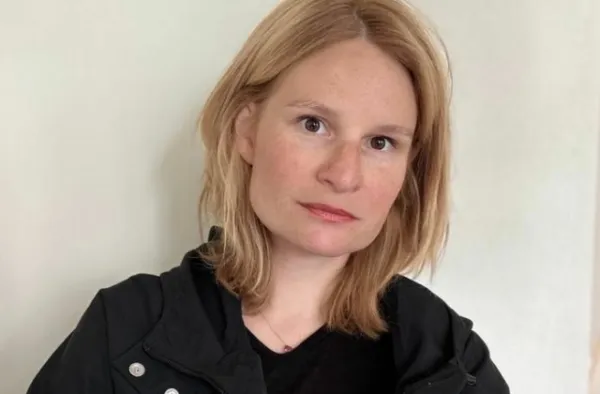
Lesia was a Safe Haven Fellow at NIAS during 2024-2025.
Lesia Kulchynska is a Kyiv-based independant curator and visual studies researcher.
Kulchynska holds a Ph.D. in Film Studies from the National University of Kyiv-Mohyla Academy, Kyiv, Ukraine, and teaches cultural studies at the Kyiv Academy of Media Arts. In 2018–19 she was a Fulbright Scholar at New York University, and in 2022-2023 she was a fellow at Bibliotheca Hertziana – Max Planck Institute of Art History. Her research interests are the theory and history of the image, particularly the performativity of the image, and the relationships between image and violence.
Kulchynska has held positions at the Research Platform of the Pinchuk Art Center (2021–2022) and as a curator at the Set Independent Art Space (2019–2020) as well as at the Visual Culture Research Center / VCRC (2011–2019). Past curatorial projects developed by Kulchynska include Sweet Dreams Foundation (Nida, 2022, Kaunas, 2023), State of Emergence (Bucharest 2022), Radically Different Society (New York 2021), The Reason Of Disappearance (Kyiv 2021), Art = Capital? Public Self-Reflection Program at Kyiv Art Fair (Kyiv 2020), Somewhere Out There Somewhere Beside (Nida 2019), The Raft CrimeA (Kyiv 2016), The School of the Lonesome – at The School of Kyiv (Kyiv Biennial 2015), Some Say You Can Find Happiness There (Kyiv 2015) and Ukrainian Body (Kyiv 2012).
Kulchynska created the talk show Sincerely About Art and founded the Nomadic School of Visual Education and the web project Service Website. Kulchynska is editor of Joseph Beuys: Everyone is an Artist (Kyiv 2020) and The Right to the Truth: Conversations on Art and Feminism (Kyiv 2019) and the author of Meaning Production in Cinema: Genre Mechanisms (Kyiv 2017). (2023)
Research question: How does the visuality-driven media environment shape military operations during the Russo-Ukrainian war and, on the other hand, how does military violence shape the operations of images?
In modern warfare media coverage is very visible and intense, including in the ongoing Russo-Ukrainian War. Images of violence circulated by the media can evoke strong emotions like guilt, fear, anger, or satisfaction, which can influence social choices, consumption habits, and political decisions. Beyond being a tool for information warfare, these emotionally charged images also play a part in the attention economy of social media and the global war-military complex. They can generate profits, open new markets, and direct the flow of capital.
In her research, Kulchynska is looking at how images related to the Russo-Ukrainian War are produced, shared, and consumed. She is exploring how visuality and violence intersect in modern warfare, viewing the war as an industry driven by visuals. Her focus is on the strategies and infrastructures behind image creation, and how violence is used as a tool to produce impactful images.
theory and history of the image; performativity of the image; relationships between image and violence