Centre for Advanced Study Sofia
Bulgaria

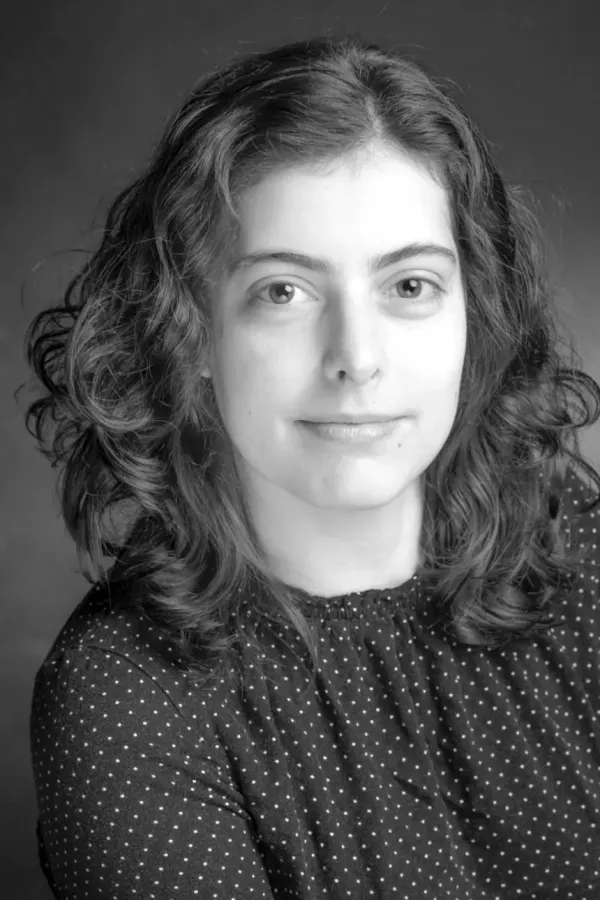
Radoslava Kuneva holds a BA in Cultural Studies (2015) and an MA in Urban Studies (2018) from the Erasmus Mundus “4CITIES” programme and earned her PhD from Sofia University “St. Kliment Ohridski” in 2025 with a dissertation on the role of culture in contemporary European urban planning. Her academic path has included international experience as a visiting doctoral fellow at the Department of Sociology at the University of Vienna and the Faculty of Humanities at the University of Cagliari.
Radoslava has been a research fellow at Sofia University on projects related to cultural heritage and sustainability. Since 2025, she has also taught as an adjunct lecturer in the Department of History and Theory of Culture, leading seminars in courses of urban anthropology and the anthropology of waste.
Her research interests include the social production of space, urban and environmental imaginaries, and urban governance. Driven by a strong interest in the relationship between humans and their environments, she brings a multidisciplinary lens to her work – an approach further enriched by her passion for birdwatching, which inspires her to explore urban nature through attentive observation.
Selected publications:
The proposed research project aims at exploring the ways in which nature in urban settings has been constructed as wild for the purpose of its’ protection in the case of two post-socialist cities in Southeastern Europe. Contemporary environmental discourse increasingly recognizes nature as an equal partner to the built environment in fostering climate-adaptive and ecologically sustainable urban settlements. Focusing on Sofia and Bucharest, the research critically assess the processes of “renaturalisation” and “rewilding” of the urban. The Boyana Marsh in Sofia, a natural wetland under pressure from private development, and Văcărești Nature Park in Bucharest, a wetland emerging from an abandoned socialist-era artificial lake project, share distinct physical histories yet have converging meanings as unique urban wildlands in the city, important for sustainable development and refuge for non-human species. The study is using critical cultural and urban studies approaches, such as oral history and discourse analysis to challenge the dominant narrative of “wild” post-socialist cities. It situates these processes within the broader context of Bulgaria's and Romania’s socialist legacies and their transitions to market economies and democratic governance. The study hypothesizes that examining these cases jointly can reveal how discourses of climate change shape contemporary urban nature's construction and contestation.
urban nature; rewilding / renaturalisation; post-socialist cities; environmental discourse; sustainable development; climate change