Netherlands Institute for Advanced Study in the Humanities and Social Sciences
Netherlands

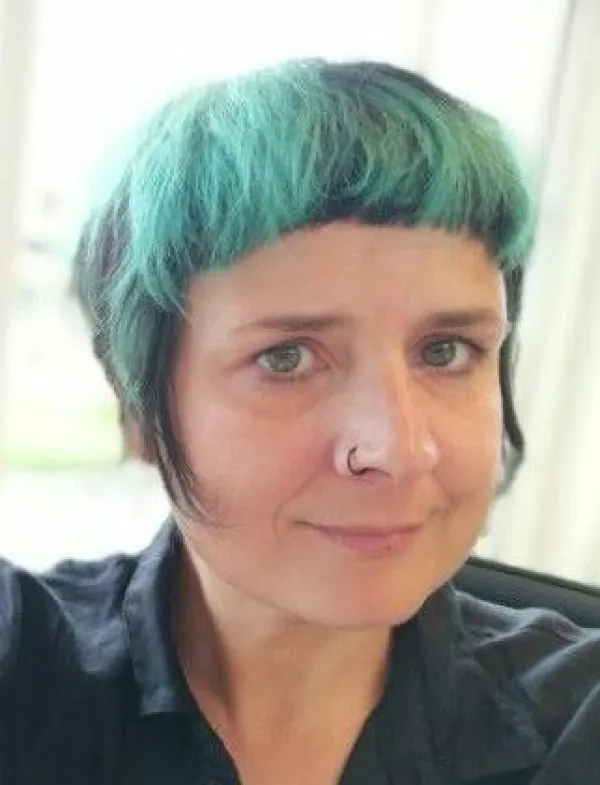
Yvonne is a NIOO-KITLV-NIAS Theme Group Fellow (Climate Change and the Governance of Tropical Marine Conservation) during 2022-2023.
Yvonne’s research interests are power asymmetries in access to natural resources. In her current research project she investigates climate change and governance in marine protected areas in the Dutch Caribbean and Indonesia. She is also involved in the DFG-funded project “Ecological and socio-economic functions of low land rainforest transformation systems in Sumatra, Indonesia”, where land and forests were the resources at focus, also in the context of governance and governability. Yvonne is also interested in feminist political ecologies.
Country/Region of interest/research focus: Dutch Caribbean, Indonesia
How do Marine Protected Areas (MPAs), as the most prominent governance tool to protect marine ecosystems, cope with dynamic consequences of climate change? How are MPA borders, intending to preserve biodiversity, negotiated in a social-political context? What can an approach considering more-than-human entanglements contribute to tropical marine conservation in times of a changing climate?
Ocean health plays an extraordinarily important role in the current climate crisis. They serve as climate regulator by absorbing and redistributing carbon dioxide (C02) and heat. Obviously, oceans also support services beyond climate regulations such as providing food, energy, health and well-being services by offering a transport infrastructure, and by serving as a cultural and recreational site. These benefits will likely cease as the health of oceanic ecosystems deteriorate. For example, the oceans already seem to be losing their ability to act as carbon sinks and coral reefs are dying from ocean warming resulting in complex cascading risks including the ocean’s ability to provide food.
The most prominent global policy tool to protect marine ecosystems are marine protected areas (MPAs). While oceans play a crucial role in sustainability and resilience, and MPAs are the tool to preserve oceans, their efficiency is often questioned. Controversies span from parks that only exist on paper while not being actively managed, to ecosystems within protected areas deteriorating as fast as outside and ocean grabbing discourses in which MPAs exclude communities from access to resources they depend on for their livelihood. This controversy has only increased as climate change adds additional, external stressors onto marine ecosystems.
Surprisingly, little research has investigated how MPAs are impacted by climate change or how potential governance responses can keep pace with these dynamic stressors. However, the international community (Agenda 2030 and the Convention for Biological Diversity) has pushed for a massive increase in ocean area protected by MPAs, the so called ‘30by30 goal’ aims for 30% of the oceans protected by 2030. If MPAs are to meet their objectives of preserving marine ecosystems and creating more resilient biological communities that can resist and recover from climate events, they will need to consider the consequences of climate change.
To gain a better understanding on how MPAs are coping in times of a changing climate, the theme group on ‘Climate Change and Tropical Marine Conservation’ will bring together information on what observed impacts of climate change on human and non-human communities in and adjacent to MPAs are. As research cases, the project will investigate four MPAs representing highly sensitive and biologically diverse tropical marine social-ecological systems. These MPAs, two in Indonesia and two in the Dutch Caribbean, serve as a magnifying glass in our multi-scalar investigation on future ocean governance. Related to this first question, we want to compile information on what actual and potential governance responses to climate change consequences are. The final piece of this puzzle that we would like to discuss then is to what extent does ocean governance respond to climate change induced social-ecological impacts? Why (not)?
marine conservation governance; climate adaptation; social-ecological systems; more-than-human approaches; protected area politics; biodiversity management; community livelihoods