Helsinki Collegium for Advanced Studies
Finland

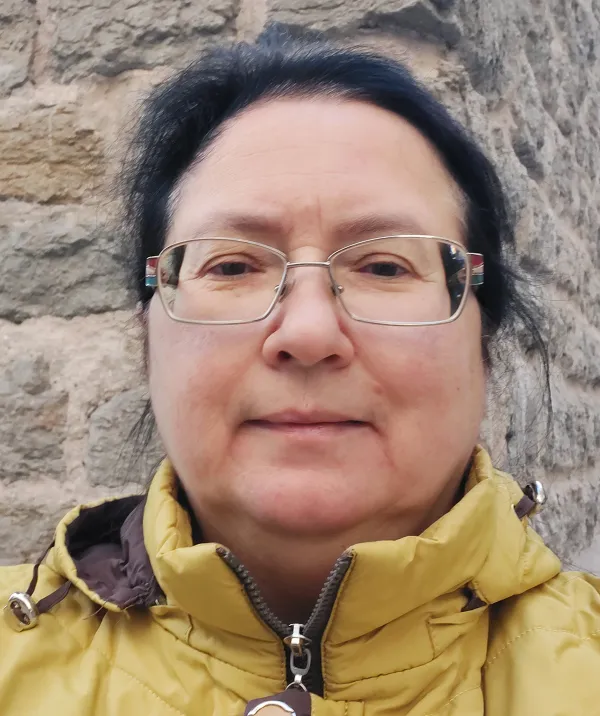
Julia Lajus was a Senior Smithsonian Fellow at the National Museum of Natural History in Washington DC in 2025 and a Senior Fellow at the Institute of Advanced Study in Amsterdam in 2024. In 2023, she served as a Visiting Associate Professor at Columbia University (New York), where she taught courses on the history of the Arctic and the history of climate science. Before 2022, she was the Head of the Laboratory for Environmental and Technological History and an Associate Professor at the National Research University Higher School of Economics in St.Petersburg, Russia. In 2011–2015 Julia Lajus served as a Vice president of the European Society for Environmental History (ESEH).
The Arctic climate is currently changing at least three times faster than the climate of the planet as a whole. There is no doubt that this warming has an anthropogenic cause. It is less well known that a hundred years ago, there was also a period of regional Arctic warming that had predominantly natural causes. Warming affected fisheries in the North Atlantic sector of the Arctic waters, motivating studies of glaciers and sea ice and encouraging the exploration of the Northern Sea Route by the Soviets. Observations of changes affected the general understanding of climate mechanisms and forced scientists to shift their views towards accepting the possibility of climate change on a historical scale that they previously rejected. The need to study changes in the Arctic was one of the drivers behind the organization of the Second International Polar Year in 1932–1933. However, political instability in this period, with the Great Depression, Hitler’s coming to power, and repression in the Soviet Union, hampered Arctic research and international cooperation. Julia Lajus’ project addresses the following issues: how Arctic warming came to be recognized; what methods were used for its documentation; its influence on sea ice distribution, glacier ablation, and marine animal migrations; how knowledge of Arctic warming circulated transnationally; relations between scientists and authorities in this period and their influence on research agendas in different national and transnational contexts.
History of environmental sciences, history of the Arctic, history of marine environment and fisheries