
Collegium Helveticum
Switzerland

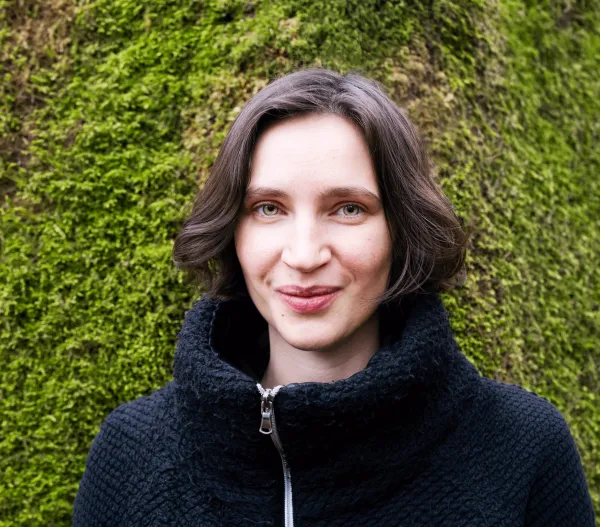
Urte Laukaityte (born 1992 in Vilnius, LT) is a writer and philosopher of the mind and the life sciences. Her work examines the role of expectations in states of health and ill-health. As a result, she has been especially interested in mind-body phenomena that are shaped by contextual factors in significant ways, such as placebo/nocebo effects, cultural idioms of distress, transient mental illness, mass psychogenic illness, functional and persistent symptoms, among others. Her research aims to better understand the relevant (bio)cognitive processes and sociohistorical dynamics involved, as well as the implications of their interactions for illness experience of all kinds.
Urte completed her PhD in philosophy at UC Berkeley (US). She has prior training in cognitive science from the University of Edinburgh (UK) and linguistics from the University of Cambridge (UK). Her approach has been influenced by crossdisciplinary environments at programs like DISI, SSNAP, PIBBSS, and more. Urte has conducted research as a Solitude fellow (DE), a Chateaubriand fellow (FR), a Global Priorities fellow (UK), and an Ernst Mach fellow (AT).
She is passionate about public engagement, serving as assistant producer for the Many Minds podcast and a contributing editor at the Public Domain Review. Her writing has appeared in various magazines, including Aeon and History Today. Urte is also involved in several art-science collaborations.
This project focuses on the processes underlying symptom perception with a view towards improving health outcomes.
Clinicians have known for a long time that symptom experience does not always track the extent of damage or disease involved. In some cases, such as functional neurological disorder, the two diverge dramatically, but the possibility of varying degrees of mismatch applies more generally. The leading inferential view of symptom perception provides a plausible account of the formation of illness experience. However, more needs to be done to understand the broader contributions to the causal dynamics—both synchronic and diachronic.
Urte Laukaityte intends to connect cognitive (neuro)science research with historical inquiry, building on Ian Hacking's proposal of ecological niches of illness1. While a helpful notion to conceptually organize the various factors involved, it has not been adopted widely due to the specificity of its original formulation. Given her interdisciplinary training, Urte will synthesize disparate research literatures to develop richer, more apt concepts, which could help alleviate some of the immense burden of persistent symptoms.
symptoms; diseases; perception; synchronic and diachronic