
Collegium Helveticum
Switzerland

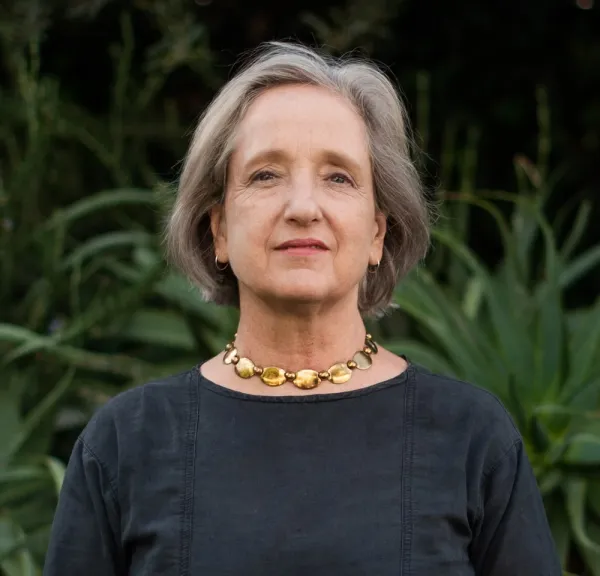
Hannah le Roux is a registered architect and an associate professor at the University of the Witwatersrand in Johannesburg. She uses design research, architectural history, urbanism, and curation as modes to engage with the impacts of modern architecture in Africa. This research currently extends to a concern with modernist materials, including the political and cultural economies of their distribution, and their long term consequences. For instance, between 2017–2019, as a fellow on the Mellon/Canadian Centre for Architecture project Architecture and/for the Environment, she researched the toxic legacy of asbestos-cement and continues that work through the Aggregate collective project called Toxics. She is a member of the European Architectural History Network and the editorial board of their journal Architectural Histories, a regional editor for The Journal of Architecture, and a member of the Society of Architectural Historians.
While at the Collegium, Hannah worked on questions of a Swiss/Witwatersrand commons by extrapolating shared ecological, cultural, and ethical stories from three material objects related to the modernist black township of Soweto.
The idea of the commons has entered urban studies as a way to describe the shared resources that shape cities. In contrast with this positive view, histories of north-south extractivism show the territorialization of indigenous common lands and praxis. This event suggests a third, intersecting definition of a commons. Using transdisciplinary and cross-site studies, it explores how Western techné reshapes and disturbs the commons on the African continent, through acts of survey, settling and servicing the land. At the same time, the use of such techné might be reconsidered with a view to reparation.
The event takes place on the anniversary of an important day in Africa’s de-colonial history: the student uprisings against apartheid that began in Soweto on June 16, 1976. The event uses as its datum a typical domestic property, lying 1632m above sea level, that was impacted by three apparently unlinked, and little remarked on moments of Swiss technical practice. These dimensions will serve as a starting point to explore other aerial, terrestrial and sub-surface positions and disturbances, amplified through creative research, in conversations that reach towards the repair of the Commons at a planetary scale.
Three sessions will be bracketed by three artists projects created for this event, following the course of the day from sunrise to sunset in Soweto. We conclude with an apéro designed around Swiss/Basotho food histories. Together, they will offer new perspectives on these common histories.
Africa; de-colonialization; history; architecture