
Netherlands Institute for Advanced Study in the Humanities and Social Sciences
Netherlands

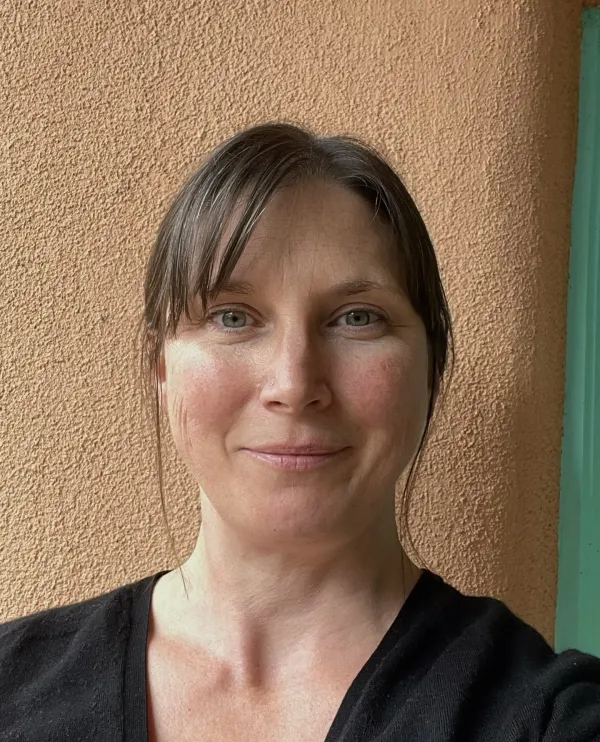
Assistant Professor of Neurosymbolic AI in the Institute of Logic, Language, and Computation, University of Amsterdam
While large language models (LLMs) are undeniably successful, there are also areas in which they fail. These include compositional generalisation, abstraction, and analogical reasoning. In contrast, humans – including children – perform these tasks with ease.
Humans are able to perform these tasks because we can manipulate and reason with symbols, whereas evidence suggests that LLMs rely largely on shallow pattern matching. However, an emerging paradigm seeks to incorporate symbolic structure into neural systems: neurosymbolic AI. Neurosymbolic models have interpretable structure and are less susceptible to solving problems based on surface similarities. At the same time, they benefit from graded neural representations that can be learned from data.
With this project, Martha Lewis will examine how symbolic theories of analogical reasoning can be realised in neural networks. To map from symbolic to neural models, she will use methods such as Tensor Product Representations, categorical compositional distributional semantics, and Logic Tensor Networks.
Each approach makes different commitments regarding concept representation and composition, thereby contributing to our understanding of what is required for analogical reasoning.
neurosymbolic AI; large language models; analogical reasoning; symbolic reasoning